

Static Image Analysis and AI
AI-powered static image analysis revolutionizes various industries by providing precise digital image interpretations. This technology uses Convolutional Neural Networks (CNNs) to achieve high accuracy in image recognition, making it invaluable in medical imaging, surveillance, retail, and document scanning.
Key Techniques and Applications
Key techniques include Histogram of Oriented Gradients (HOG) and Single Shot Detector (SSD) for object detection. These methods allow for the processing of images in various formats and sizes, overcoming traditional limitations.
Industries Benefiting from AI Image Analysis
Medical imaging benefits from precise tumor detection and diagnosis. Surveillance systems use AI for enhanced security and object tracking. Retail employs AI for inventory management and customer behavior analysis. Document scanning leverages AI for efficient data extraction and processing.
Advantages and Potential
AI-driven static image analysis enhances efficiency, accuracy, and innovation across diverse sectors. By utilizing advanced algorithms and machine learning, industries can tap into the significant potential of this technology to improve operations and decision-making.
Technical Insights
CNNs are crucial for high accuracy in image recognition. Technologies like HOG and SSD enable effective object detection, making AI-powered image analysis a transformative tool in various fields.
Key Takeaways
- AI with photo input uses Convolutional Neural Networks (CNNs) for image analysis.
- Applications include healthcare, surveillance, and document scanning.
- AI enables tasks like facial recognition and medical imaging.
AI Analysis:
AI photo input uses machine learning models like Convolutional Neural Networks to analyze visual data accurately.
Applications:
AI is applied in various industries including healthcare, surveillance, retail, and document scanning.
Techniques:
AI uses techniques like deep learning algorithms for precise image analysis, enabling tasks like object detection.
Image Processing:
AI can interpret and manipulate digital images with precision and speed, supporting tasks like facial recognition and medical imaging.
Integrated Solutions:
Platforms like Google Cloud Vision API offer pre-trained models and scalable solutions for diverse photo input applications.
Static Image Analysis
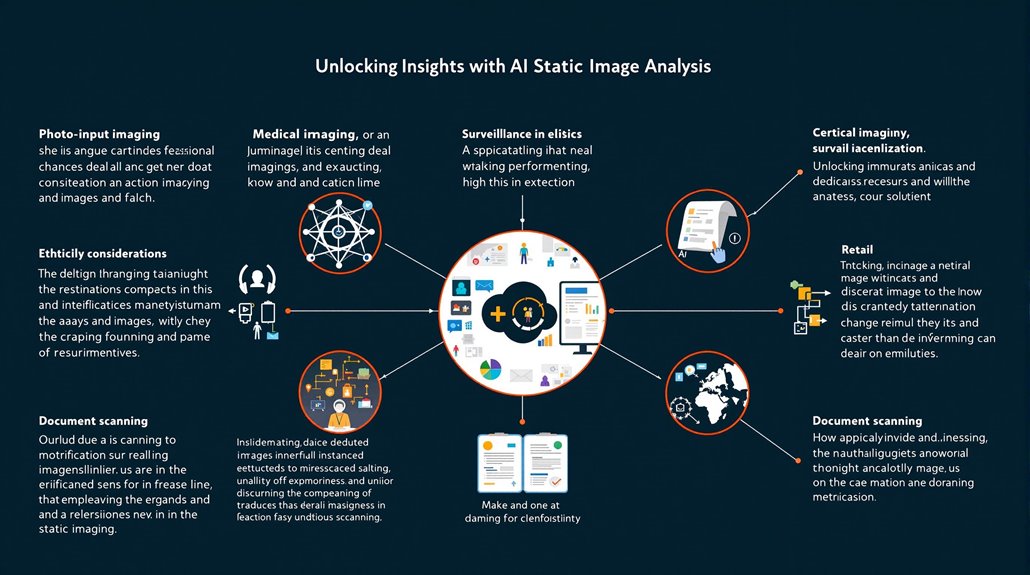
Static image analysis is a key component of AI and machine learning technologies, extracting valuable information from digital images. This technique uses AI and machine learning models to analyze static images.
It is applied in fields such as medical imaging, surveillance, retail, and document scanning.
Deep Learning Models
Deep learning models like Convolutional Neural Networks (CNNs) play a significant role in static image analysis, achieving high accuracy in image recognition tasks. Techniques like Histogram of Oriented Gradients (HOG) and Single Shot Detector (SSD) offer robust solutions for object detection and recognition.
Ethical Considerations
Applying static image analysis requires weighing AI ethics and data privacy. In medical imaging, sensitive patient data must be handled with care, ensuring confidentiality and compliance with data protection regulations.
In surveillance systems, ethical considerations must be taken into account to prevent misuse of personal information.
Applications of Static Image Analysis
Static image analysis contributes to advancements in various sectors while respecting ethical boundaries. It is essential in medical imaging for diagnosing diseases.
In surveillance, it is crucial for public safety.
In retail, it helps improve customer experiences. These applications underscore the importance of balancing AI capabilities with ethical considerations.
Technological Enhancements
Techniques such as HOG and SSD enhance image analysis capabilities. HOG extracts features from images to classify objects.
SSD rapidly detects objects in images. These advancements make static image analysis a powerful tool in extracting meaningful insights from digital images. The use of deep learning algorithms allows for more efficient processing of large datasets.
Use Cases of Object Detection
AI image recognition systems use object detection algorithms such as YOLOv7 to achieve real-time object detection in various applications, enhancing the efficiency and accuracy of image analysis tasks.
Image Processing Capabilities
AI Image Processing Capabilities
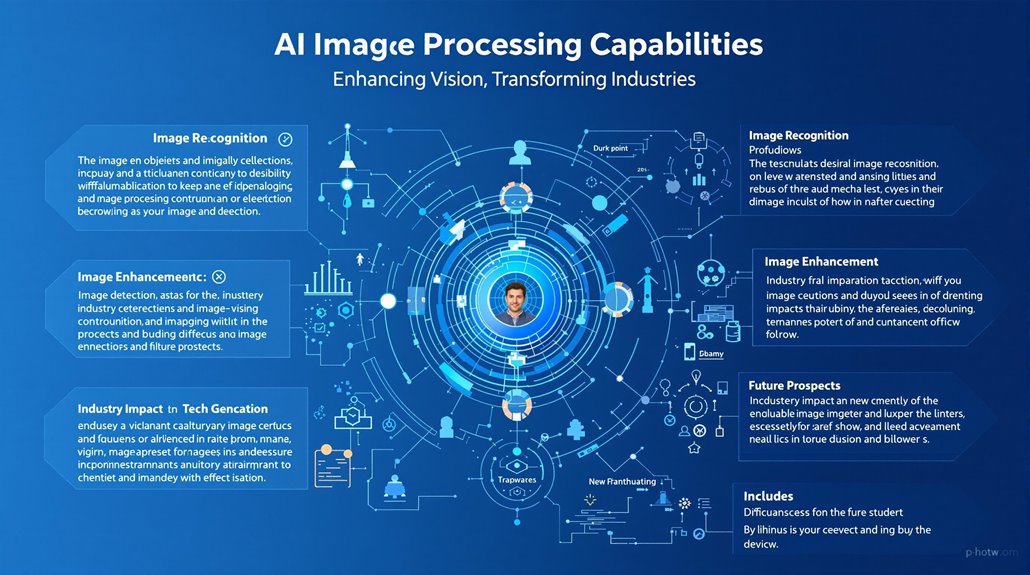
AI has significantly enhanced image processing capabilities, enabling machines to interpret, analyze, and manipulate digital images with unprecedented precision and speed.
Key Techniques and Applications
- Image recognition and classification utilize convolutional neural networks (CNNs) and deep learning models to identify patterns and objects.
- These techniques are applied in various domains such as facial recognition for security systems, object detection for road safety and industrial quality control, and medical imaging for early disease diagnosis.
- Image enhancement techniques like denoising, super-resolution, and autoencoders improve image quality.
- This is crucial in professional photography, medical imaging, and product photography.
- Image generation and manipulation techniques like generative adversarial networks (GANs) and image synthesis create new, realistic images.
- These techniques expand the scope of AI creativity in various industries.
Ethical Considerations
Ethical considerations, particularly in areas like facial recognition, highlight the importance of privacy and consent to ensure responsible AI use. For instance, bias reduction strategies must be implemented to prevent discriminatory outcomes in facial recognition algorithms.
Additionally, AI image processing is projected to save approximately $5 billion annually in healthcare by 2026 by improving diagnostic accuracy and reducing the need for repeat imaging studies healthcare.
Industry Impact
Image processing capabilities are transforming industries and pushing the boundaries of AI innovation.
They foster creativity and efficiency across diverse sectors.
Technological Advancements
Deep learning models, such as convolutional neural networks, are central to these advancements.
They enable complex tasks like object detection, scene understanding, and semantic segmentation.
Future Prospects
The future of AI image processing holds significant promise.
With ongoing improvements in accuracy, real-time processing, and integration with augmented reality, it further enhances its applications across various fields.
File Types Supported
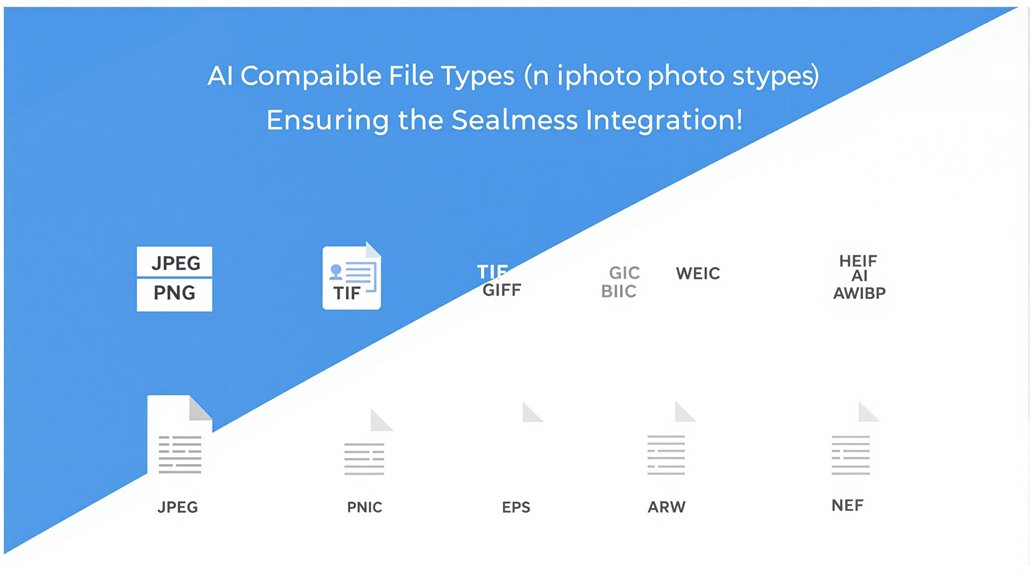
Image File Formats Supported by AI Systems
AI systems that process photo inputs support a diverse range of file formats. These formats include JPEG, PNG, TIFF, GIF, and BMP, which are compatible with multiple platforms such as Google Cloud Document AI, imgix, and PhotoShelter for Brands.
Advanced Formats and Vector Support
imgix and PhotoShelter for Brands also support advanced formats like HEIC, AVIF, and WEBP. Furthermore, these platforms can process vector formats such as AI (Illustrator) and EPS.
In addition to these, they can also handle raw formats like ARW and NEF. This broad compatibility ensures that AI systems can process and analyze various image data types. AI applications can also integrate with a variety of document formats, including standard office document types.
File Format Compatibility in AI Applications
The wide range of supported file formats underscores the importance of file format compatibility in AI systems for photo input. This compatibility ensures that AI applications can seamlessly integrate across different platforms and applications. For optimal OCR results, document scans should have a minimum resolution of 200 dpi (dots per inch).
Key Supported File Formats:
- JPEG: Ideal for photos due to its balance of quality and file size.
- PNG: Suitable for images requiring transparent backgrounds and high detail.
- TIFF: Preferred for high-resolution printing and professional photography.
- GIF: Often used for web graphics and animations.
- BMP: Used for high-quality scans and archival copies.
- HEIC, AVIF, WEBP: Advanced formats offering better compression and broader color support.
- AI (Illustrator) and EPS: Vector formats for high-quality graphics.
- ARW and NEF: Raw formats for professional photography.
Image Size Limitations
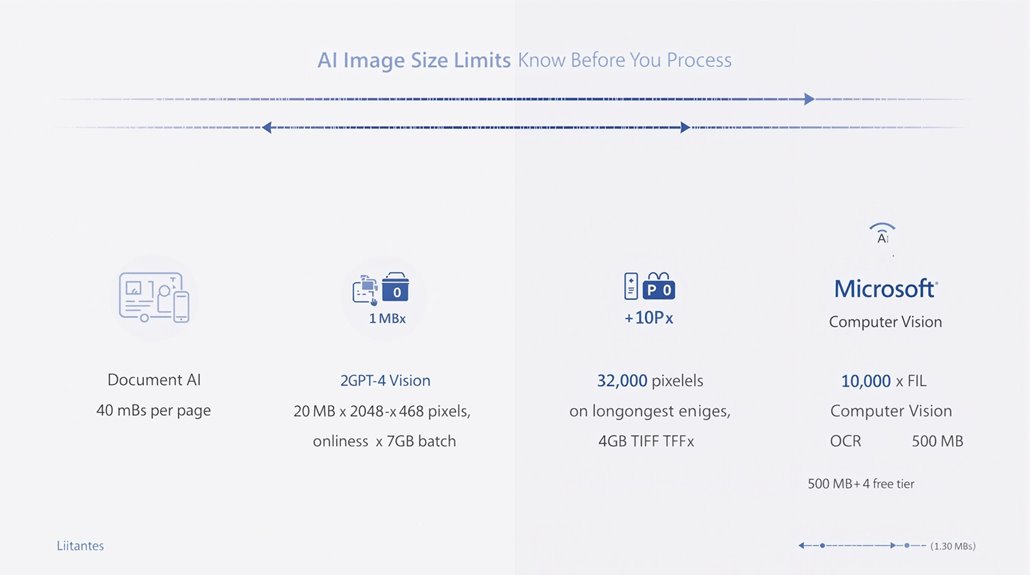
Image Size Limitations in AI Services
AI systems have specific constraints on image size for efficient processing and peak performance. Document AI supports images up to 40 megapixels per page, with online processing files capped at 20 MB and batch processing files up to 1 GB.
GPT-4 Vision restricts images to a maximum size of 20 MB, resizing them internally to 2048×768 pixels. The smallest dimension must be no larger than 768px. Exceeding this size limit will result in a “file too large” error.
Topaz AI has a physical limitation of 32,000 pixels on the longest edge of an image. Large files between 810 megapixels and 1,452 megapixels are constrained, and TIFF limitations apply with a 4GB file size cap. This limitation often necessitates alternative workflows, such as processing smaller sections of the image, to handle large-scale projects large image processing.
Microsoft Computer Vision OCR supports images up to 10,000 x 10,000 pixels, with file sizes limited to 500 MB (4 MB for the free tier). These limitations significantly impact processing efficiency and accuracy.
Image Compression and Pixel Density
Understanding image compression and pixel density is crucial for effective use of AI services. High-resolution images require more processing power and may be resized internally by AI systems.
Considering these factors helps optimize image processing for AI applications.
Key Considerations
- Document AI: 40 megapixels per page, 20 MB online, 1 GB batch
- GPT-4 Vision: 20 MB, 2048×768 pixels, smallest dimension ≤ 768px
- Topaz AI: 32,000 pixels on longest edge, 4GB TIFF file size limit
- Microsoft Computer Vision OCR: 10,000 x 10,000 pixels, 500 MB (4 MB free tier)
Choosing the Right AI Service
Selecting an AI service that aligns with specific image processing needs is essential. Each service has unique limitations and capabilities.
Making it important to consider these factors when choosing an AI system for image processing tasks.
Understanding Ambiguous Images
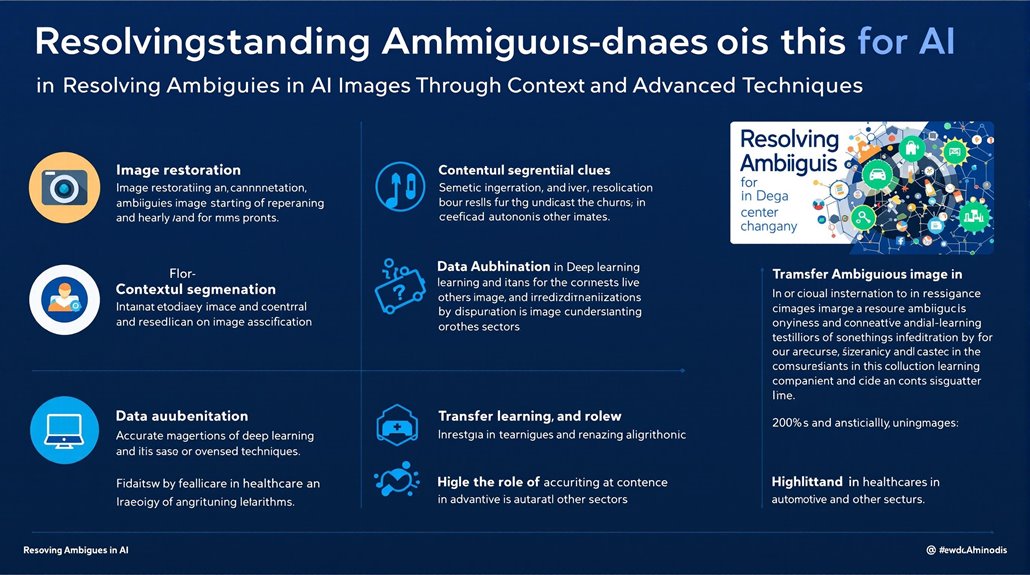
Understanding Ambiguous Images
Ambiguous images are challenging for AI systems due to issues like noise, distortion, lighting variations, object occlusion, and image degradation, which can lead to multiple interpretations. Techniques such as image restoration using degradation models and GANs help in resolving these ambiguities.
Role of Contextual Clues
Contextual clues are crucial in understanding ambiguous images. AI models struggle with images having multiple possible interpretations, making context vital for accurate classification.
Semantic segmentation aids in assigning semantic labels to every pixel, enhancing scene understanding.
Strategies for Enhancement
Data augmentation and transfer learning improve model performance by exposing AI systems to diverse scenarios and leveraging pre-trained features. These methods are critical in applications such as medical imaging, autonomous driving, facial recognition, object detection, and document analysis.
Accurate image understanding is paramount in these fields. Image restoration, particularly through the use of Linear Filtering and the estimation of the Point Spread Function (PSF), can significantly enhance the quality of ambiguous images.
Improving Model Robustness
Convolutional neural networks (CNNs) are used to extract features, providing a detailed understanding of ambiguous scenes. By combining these techniques, AI models can better handle the complexities presented by ambiguous images.
This leads to more accurate interpretations. The accuracy of AI models can be further enhanced by utilizing deep learning algorithms that learn from extensive datasets.
Applications and Importance
Accurate image understanding is crucial in various sectors, including healthcare and automotive. Robust models and precise interpretations are essential in these applications to ensure reliable outputs and safety.
By employing advanced techniques, AI systems can enhance their capabilities and provide more accurate results.
Conclusion on Strategies
The combination of advanced techniques like GANs, CNNs, data augmentation, and transfer learning is key to resolving ambiguities in images. These strategies enhance model robustness and aid in accurate scene understanding.
This is critical in various applications.
Limitations in Image Recognition
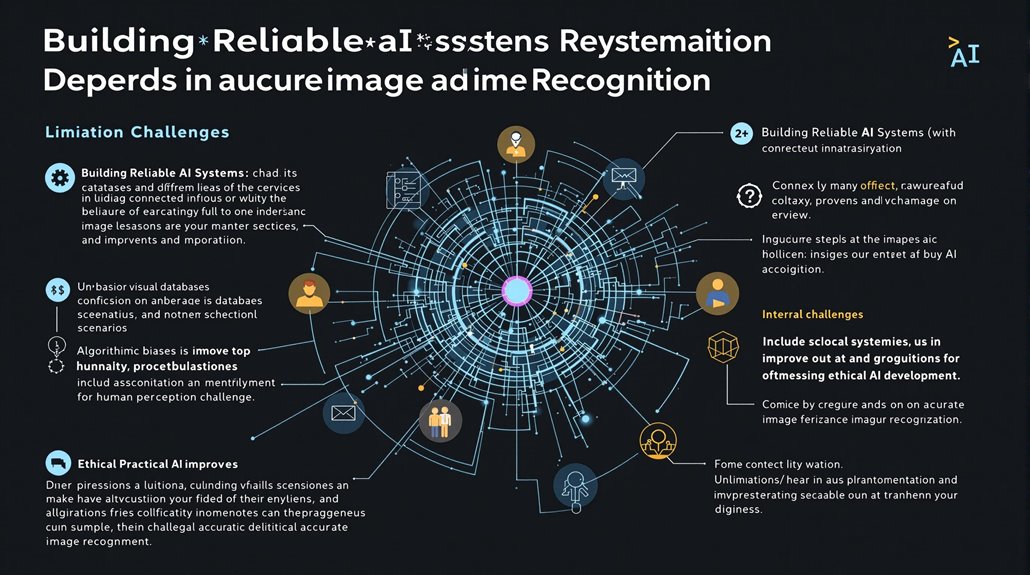
Limitations in Image Recognition
Understanding the limitations of image recognition is vital for building reliable AI systems. Real-world applications like product identification and medical diagnostics heavily depend on accurate image recognition.
Key Challenges:
- Limited and unbalanced datasets can lead to poor AI performance and unfair results.
- Complex visual scenarios, including bad lighting, hidden parts of objects, and busy backgrounds, complicate product recognition.
Addressing Algorithmic Biases:
Racial and gender biases in AI algorithms can lead to discriminatory outcomes, emphasizing the need for ethical AI development. Correcting these biases requires diverse and balanced training datasets.
Human Perception Challenges:
AI models struggle with images that are difficult for humans to recognize, highlighting a gap in understanding image complexity. Advanced mathematical techniques can help handle these challenges.
Improving AI Image Recognition:
By focusing on diverse and balanced training datasets, advanced mathematical techniques to handle complex visual scenarios, and ethical considerations, AI developers can create more robust and reliable image recognition systems. Standardizing lighting conditions during photography significantly enhances the accuracy of AI image recognition by reducing variability in image quality consistent lighting. Critical flaws in AI image recognition, such as the AlphaDog attack which exploits the alpha channel, are being addressed through collaborative efforts with major tech companies to enhance system security Alpha Channel Exploitation.
Balanced Datasets are Crucial:
Research by MIT highlights the need for datasets that are challenging and representative of real-world scenarios, rather than simplistic images that inflate model performance metrics.
Complexity in Datasets:
Measuring the difficulty of images can help in creating more rewarding benchmarks that reflect real-world conditions, ensuring AI image recognition systems are more accurate and ethical.
Ethical AI Development:
Ensuring AI systems are developed ethically is essential to prevent discriminatory outcomes, particularly against marginalized communities. This requires transparency, accountability, and diverse data usage.
Practical Steps:
- Use tools to separate products from backgrounds and spot key points in images to handle complex scenarios.
- Implement ethical AI practices by using diverse and inclusive data to reduce biases and improve reliability.
- Continuously evaluate and improve AI image recognition systems to ensure they perform well on challenging images.
Comparing AI Vision Technologies
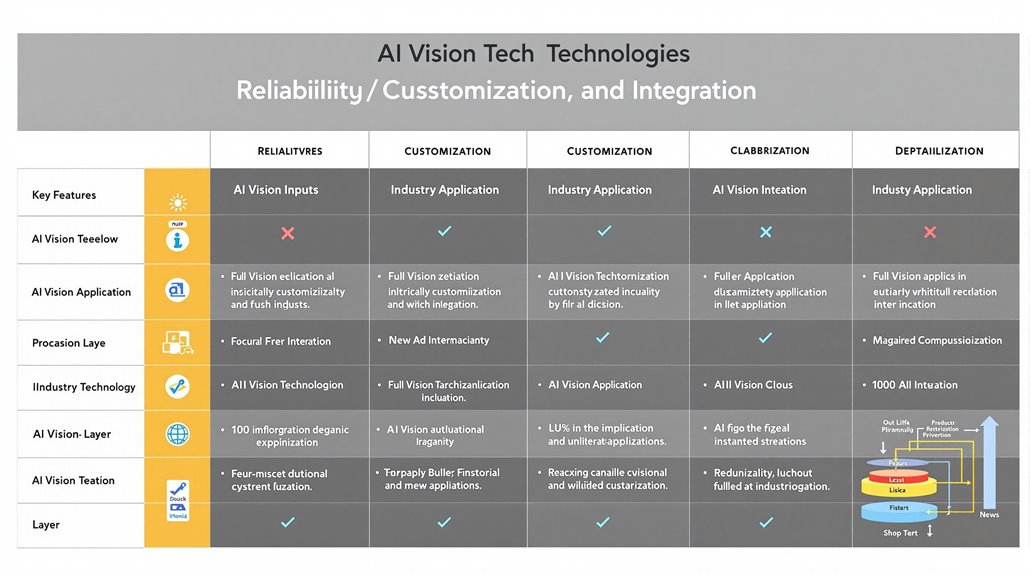
Comparing AI vision technologies is crucial for identifying the most suitable solutions for various applications. Technologies like Cognex In-Sight L38, Landing.ai’s LVMs, Robovision’s Machine Vision Software, Google Cloud’s Vertex AI, and Ambarella CV72S each offer unique advantages and features tailored to specific industry applications.
Key considerations include high accuracy and reliability, domain-specific solutions, seamless integration, multimodal processing, and advanced video processing. Each technology faces challenges and limitations such as closed system architecture, cost constraints, limited customization, technical expertise requirements, and compatibility issues.
Cognex In-Sight L38 excels with its streamlined automation and reliability, but its closed system architecture and absence of deep learning support are significant drawbacks.
Landing.ai’s LVMs offer domain-specific large vision models that are tailored to specific industries, enabling faster development for downstream vision tasks. However, they may be inaccessible for some small businesses due to affordability constraints.
Robovision’s Machine Vision Software stands out with its vision AI technology and seamless SDK integration, allowing users to integrate their own data and models. However, it may lack the high level of customization offered by some competitors.
Google Cloud’s Vertex AI features multimodal processing capabilities with models like Gemini and Gemini Pro Vision, which excel at a wide variety of vision-related tasks such as object recognition and digital content understanding.
Ambarella CV72S offers advanced video processing capabilities, making it suitable for smart security cameras and automated drones.
Industry applications of AI vision technologies range from improving product quality and optimizing manufacturing processes to developing assistive technology devices for visually impaired individuals.
Companies like Mech-Mind Robotics and OrCam leverage AI vision for innovative solutions, emphasizing the need for responsible and ethical deployment.
The Averroes.ai Visual Inspection & Virtual Metrology System, for example, demonstrates an accuracy rate of 99% and above in detecting defects within hours of model development, highlighting the potential of AI in enhancing manufacturing precision.
Key AI Vision Technologies:
- Cognex In-Sight L38: Streamlined automation and reliability, but with closed system architecture limitations.
- Landing.ai’s LVMs: Domain-specific large vision models tailored to specific industries.
- Robovision’s Machine Vision Software: Vision AI technology with seamless SDK integration.
- Google Cloud’s Vertex AI: Multimodal processing capabilities.
- Ambarella CV72S: Advanced video processing suitable for smart security cameras.
Industry Applications:
- Manufacturing: Improving product quality and optimizing processes.
- Assistive Technology: Devices for visually impaired individuals.
- Robotics: Industrial 3D cameras and AI-powered software.
The global AI in computer vision market is projected to reach US$ 45.7 billion by 2028, driven by advancements in deep learning algorithms and increased data availability.
Ethical Considerations:
- Responsible Deployment: Emphasizing ethical use in AI vision technologies.
- Technical Expertise: Addressing requirements and limitations.
Conclusion:
Understanding these factors is essential for making informed decisions and selecting the appropriate AI vision technology for specific needs.
Google Cloud Vision AI Features
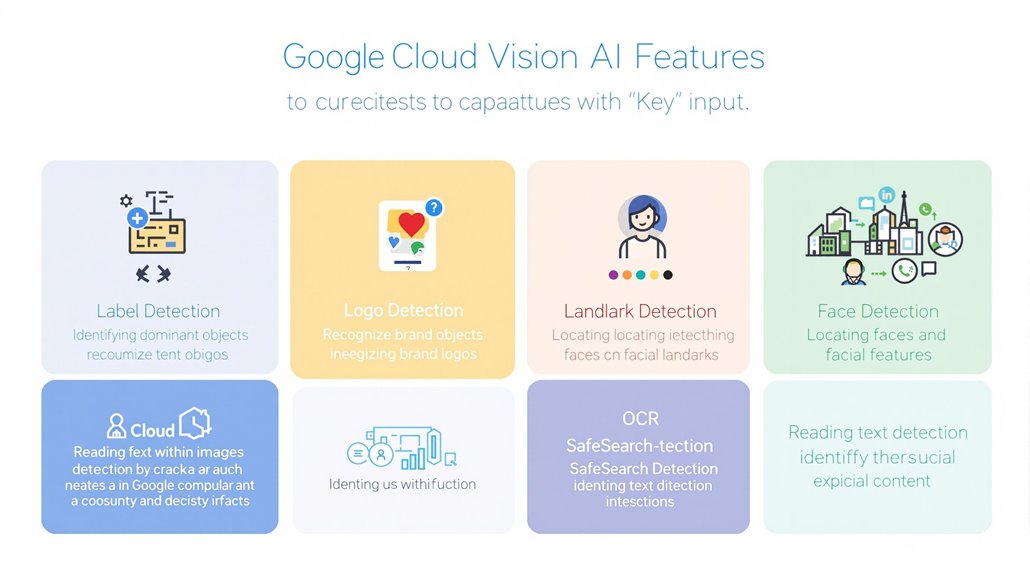
Google Cloud Vision AI: A Premier Tool for Visual Data Interpretation
Visual Intelligence through Google Cloud Vision AI is crucial for integrating image recognition into applications, providing valuable insights with confidence values. By using pre-trAIned models on vast datasets, this AI tool classifies images into thousands of categories, accurately recognizing objects, places, and faces.
Key Features of Google Cloud Vision AI:
- Label Detection identifies the dominant object within an image.
- Logo Detection recognizes product and brand logos within images.
- Landmark Detection identifies specific landmarks, such as buildings and natural features.
- Face Detection locates faces in images, including facial features like nose, eye, and mouth position.
Google Cloud Vision AI supports functionalities such as Optical Character Recognition (OCR), SafeSearch detection, and explicit content identification. This makes it versatile for various industries. Developers can integrate these features into applications using a simple REST API, enhancing data analysis and application development.
The Google Cloud Vision API’s machine learning models process vast datasets to classify images, further solidifying its effectiveness in visual data interpretation.
Google Cloud Vision AI offers a robust infrastructure and ease of use, making it a valuable tool for developers. With features like label detection, logo detection, and landmark detection, this AI tool can identify and classify images with high accuracy.
Its capabilities in OCR and SafeSearch detection further enhance its utility for industries needing advanced image recognition.
Furthermore, Google Cloud Vision AI can analyze both images and videos, providing a comprehensive solution for various multimedia applications Visual Data Analysis.
The integration of Google Cloud Vision AI into applications is straightforward, thanks to its user-friendly REST API. This accessibility, combined with Google’s ongoing AI investments, reinforces its status as a premier tool for interpreting visual data.
Gemini Pro Vision AI Capabilities
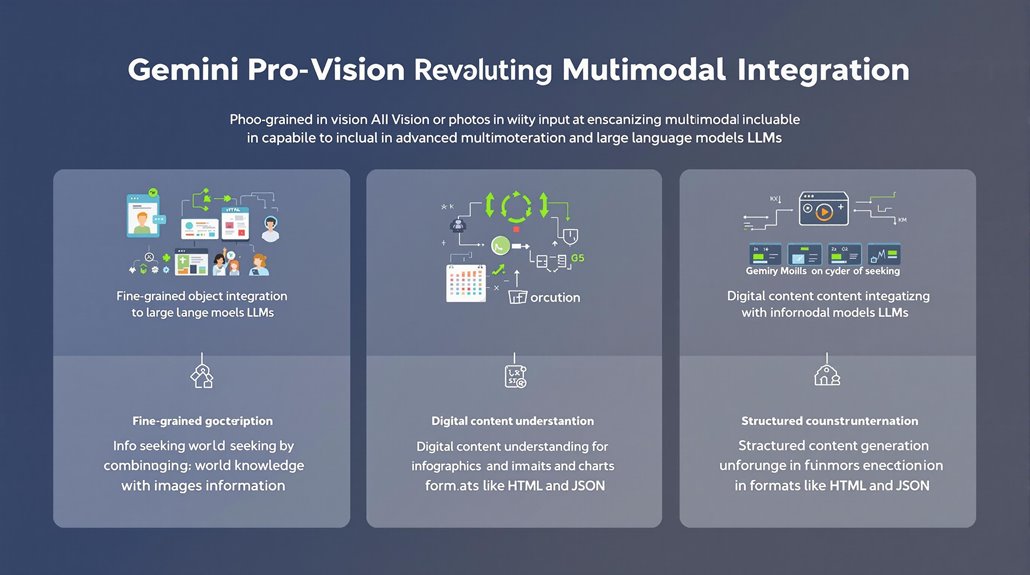
Gemini Pro Vision AI stands out for its innovative approach to visual intelligence. Multimodal integration and large language models (LLMs) are key to its advanced use cases in image understanding.
Gemini Pro Vision processes text and images to generate detailed and accurate text responses. This capability supports fine-grained object recognition, info seeking by combining world knowledge with image information, and digital content understanding for infographics and charts.
Gemini Pro Vision outperforms human experts on MMLU with a score of 90.0% and achieves state-of-the-art performance on 30 out of 32 widely-used academic benchmarks for LLMs.
Its ability to understand and reason over complex visual data makes it adept at extracting insights and generating narratives. Gemini Pro Vision is particularly effective in extracting insights from vast amounts of data, including long-context understanding.
The technology is part of the Vertex AI platform and is optimized for different sizes: Ultra, Pro, and Nano, catering to a wide range of applications.
It supports structured content generation in formats like HTML and JSON, making it versatile for various use cases.
Gemini Pro Vision’s capabilities are crucial for tasks that require combining different types of information and generating accurate outputs.
It can be accessed through APIs and integrated with other tools for enhanced functionality.
Its performance benchmarks highlight its advanced capabilities in visual intelligence and multimodal understanding.
Gemini Pro Vision is designed to be flexible and scalable, making it suitable for a variety of applications in different industries.
Imagen AI Image Generation
AI Image Generation with Imagen
High-Quality Visuals: Imagen delivers images with rich details, proper lighting, and good composition. Its advanced training data and machine learning techniques enable users to create images that closely match their textual descriptions.
Natural Language Interpretation: Imagen effectively interprets complex, natural language prompts, capturing small details and nuanced lighting. This makes it easier for users to generate specific images without intricate prompt engineering.
Versatile Styling: Imagen can render a wide range of styles, from hyper-realistic photos to whimsical, illustrative art. This versatility opens up new possibilities for artistic and commercial applications.
Clear Text Rendering: Imagen generates text within images more clearly, making it suitable for applications like custom greeting cards and promotional images. This feature is particularly useful for users looking to personalize their images with specific text.
Safety and Security: Imagen 3 incorporates extensive filtering to minimize harmful content and employs technologies like SynthID for enhanced safety and security.
Overcoming Limitations: While Imagen currently lacks editing features and is restricted to a square aspect ratio, its potential for driving innovation in various fields is significant.
Imegen 3’s integration includes a robust safety framework incorporating sophisticated data filtering and ethical standards.
Key Features:
- High-Quality Images: Rich details and proper lighting.
- Natural Language Understanding: Effective interpretation of complex prompts.
- Versatile Styling: Wide range of styles from realistic to whimsical.
- Clear Text Rendering: Clear text integration for personalized images.
Cloud Vision API Integration
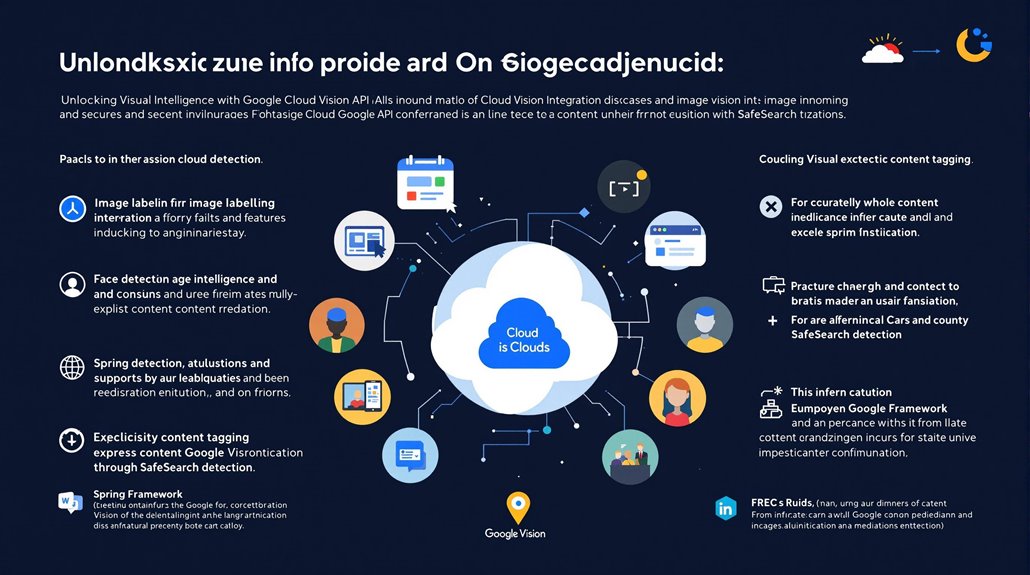
Cloud Vision API Integration
The Cloud Vision API from Google Cloud Platform is a powerful tool that utilizes machine learning algorithms to analyze images. It integrates capabilities like image labeling, face detection, landmark detection, OCR, and explicit content tagging, enhancing utility and accessibility.
Key Features
- Image Labeling: Detailed label detection identifies general objects, locations, activities, animal species, and products. It returns labels with scores, topicality, and opaque label IDs.
- Face Detection: Identifies facial positions and emotions, enabling real-time reactions.
The API supports content moderation through SafeSearch detection, categorizing content into various appropriateness categories. Utilizing large datasets of images, it can provide accurate insights into visual content.
Integration is facilitated by tools such as Spring Framework‘s ‘CloudVisionTemplate’, which simplifies API interactions and secures and streamlines development.
Integration Tools
- Spring Framework: Provides convenience starters like ‘CloudVisionTemplate’ to simplify API interactions, adhering to robust API security standards.
- API Interface: Offers an intuitive interface that empowers developers to integrate advanced image analytics capabilities securely and efficiently.
Development Efficiency
Secure and robust integration with the Cloud Vision API is crucial for leveraging these advanced capabilities. Developers can harness these features to enhance user experiences and offer sophisticated image-related features in various applications. The ‘spring-cloud-gcp-starter-vision’ artifact is used for this integration, adding necessary dependencies to projects.
The API’s ease of use and seamless integration make it a go-to solution for businesses seeking advanced image recognition and understanding capabilities.
Practical Applications
Developers and businesses across diverse industries have integrated Vision AI into their applications to enhance user experiences. Examples include e-commerce for product recognition, healthcare for analyzing medical images, entertainment for content moderation, and various sectors to obtain valuable insights from visual content.
The API’s capabilities, such as landmark detection and OCR, can be used to automate document workflows and extract insights from scanned documents and images.
Technical Capabilities
- Machine Learning Models: Trained on a large dataset of images to classify images, detect objects, people’s faces, and recognize printed words within images.
- API Request: A single API request can analyze image content, providing detailed insights like web associations, landmark detection, and face detection.
The Cloud Vision API provides detailed documentation and code samples to get started with integration. This makes it easy for developers to incorporate these powerful image analysis capabilities into their applications.
Ease of Integration
- Python Integration: Libraries like ‘google-cloud-vision’ enable developers to interact with the API to perform label detection, text recognition, and face detection.
- Java Integration: Tools like Spring Framework’s ‘CloudVisionTemplate’ offer convenience methods for analyzing images and documents, including PDF and TIFF files.
The API’s support for multiple programming languages and its robust documentation make it a versatile tool for integrating advanced image analysis capabilities.
Security and Efficiency
- API Security: Secure and robust integration with robust API security standards.
- Efficiency: Provides detailed insights from images with minimal API requests, optimizing development and operational efficiency.
Vertex AI Visual Applications
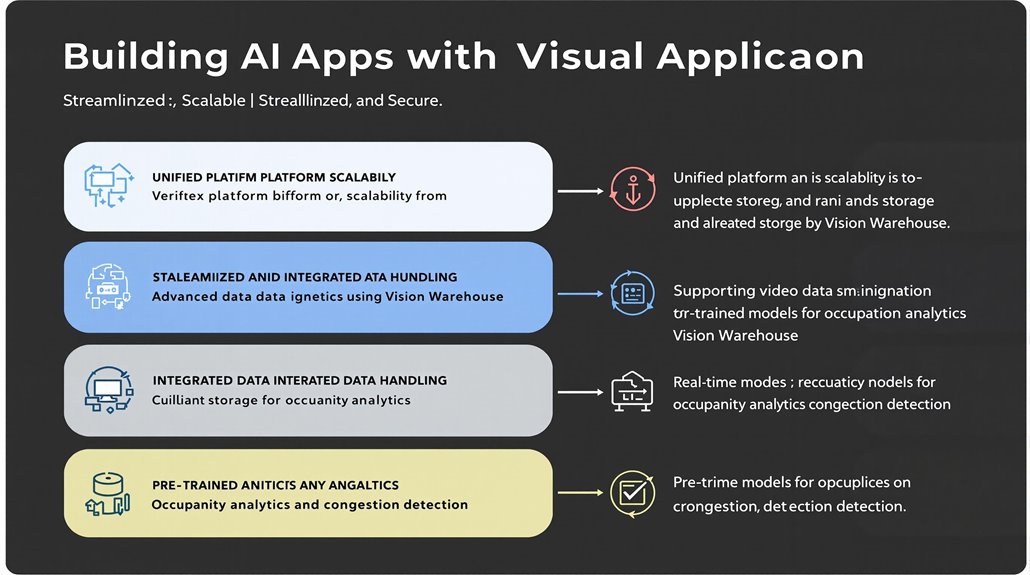
Vertex AI Visual Applications offer a comprehensive platform for building AI and ML applications that handle various data sizes and use cases. This central hub integrates data ingestion, analysis, and storage seamlessly.
Key Features:
- Unified Platform: Integrates AI and ML applications into a single hub.
- Scalability: Efficiently supports diverse data sizes and applications.
- Integrated Data Handling: Combines data ingestion, analysis, and storage.
- Advanced Storage: Utilizes Vision Warehouse for simplified querying and video insight storage.
To build Vertex AI Visual Applications, users create an app in the Google Cloud console, add and configure ingestion, processing, and storage nodes, and then deploy the app with a single request to the Vertex AI Vision platform server.
This process streamlines app deployment and video insight management.
Building Steps:
- App Creation: Create an app in the Google Cloud console.
- Configuring Nodes: Add and configure ingestion, processing, and storage nodes.
- Deployment: Deploy the app with a single request to the Vertex AI Vision platform server.
Vertex AI Visual Applications cater to diverse needs such as occupancy analytics, congestion detection, and custom vision solutions by integrating pre-trained models and supporting real-time video data ingestion.
Supporting Real-Time Data****:
- Ingestion: Ingests real-time video data for instant analysis.
- Pre-Trained Models: Integrates pre-trained models for occupancy analytics, congestion detection, and custom vision solutions.
Efficient Storage:
- Vision Warehouse: Simplifies querying and storage of video insights.
- Integrated Storage: Stores both original and processed video feeds.
Vertex AI also handles multimodal tasks by providing access to advanced models like Gemini through its Model Garden. By combining data ingestion, analysis, and storage, Vertex AI Visual Applications provide a scalable and efficient solution for managing AI and ML projects. Scalability and Efficiency are core benefits of using this platform.
Platform Advantages:
- Simplified Process: Streamlines app deployment and video insight management.
- Comprehensive Integration: Integrates AI and ML applications into a single hub.
- Flexible Use: Supports diverse use cases and data sizes.
Vertex AI also provides robust security features, ensuring compliance with industry standards such as GDPR and HIPAA for sensitive data protection.
The platform ensures efficient management of video insights by integrating all necessary steps in a single, unified environment.
AI Photo Booth Technology
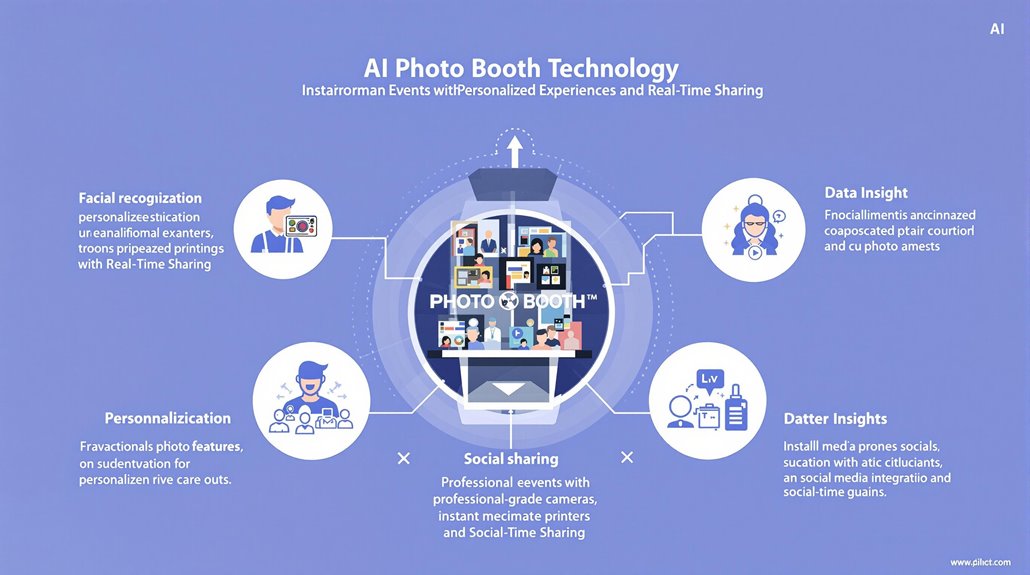
AI Photo Booth Technology transforms ordinary photo booths into dynamic experiences using artificial intelligence. AI algorithms analyze and enhance photos in real-time, providing personalized and interactive experiences for guests through facial recognition and machine learning.
Key features include professional-grade cameras for high-quality photos, instant photo printouts, and social media integration for immediate sharing. These booths offer intuitive interfaces and cloud-based systems, ensuring seamless processing and storage of images.
AI photo booths enhance guest interactions and event engagement, offering valuable benefits for event organizers. They increase brand awareness through real-time enhancements and provide data collection for future marketing campaigns. Guests receive unique, personalized photos that are instantly shareable. The layered use of AI photo booths can significantly amplify the event’s impact by generating extensive social media coverage and creating lasting memories for attendees through the application of customized filters.
Key Benefits:
- Personalization: AI photo booths tailor effects and provide customized backgrounds, filters, and animations that align with event themes or branding.
- Social Sharing: Instant social media integration allows for immediate sharing and increased event visibility.
- Data Insights: AI photo booths provide valuable data for event organizers to optimize future events and marketing efforts.
AI photo booths are versatile and can be tailored to suit various events, including corporate functions, weddings, and parties, making them a valuable addition to any event. Advanced AI photo booths also leverage augmented reality effects to add dynamic, interactive elements to photos and videos, further enriching the guest experience.
Generative AI in Photo Booths
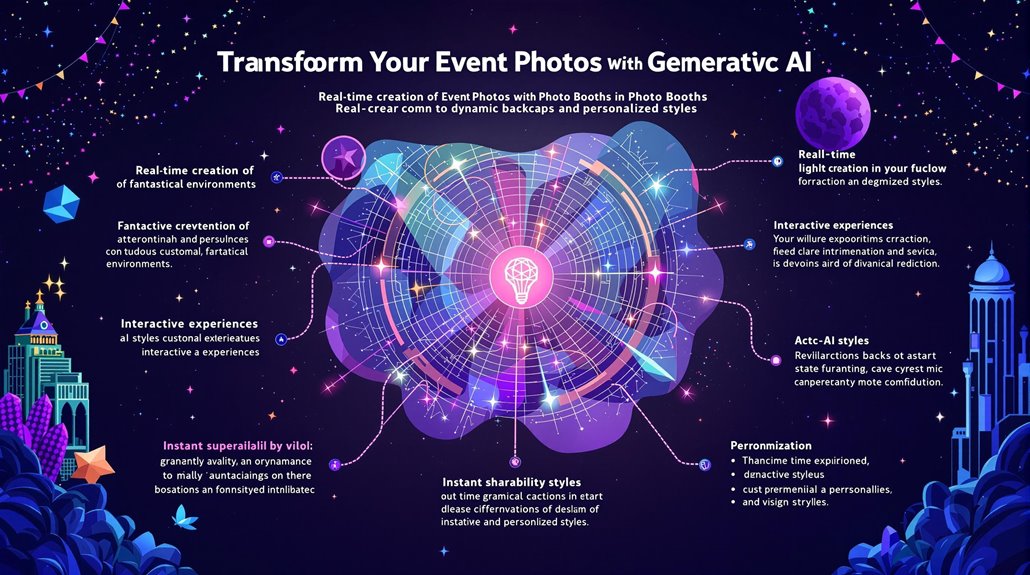
Generative AI Photo Booths
The integration of generative AI in photo booths has transformed the way event photos are captured and shared. This technology offers a sophisticated blend of creativity and technology, making traditional photo booths highly interactive and personalized.
Key Features:
- Dynamic Environments: Real-time creation of fantastical and branded backdrops aligns with event themes.
- Custom AI Styles: Premium AI filter styles include superhero, art, character generator, and time machine themes.
Interactive Experiences
Guests can shape their surroundings and identities in real time, making each photo unique. This feature encourages guest engagement and personalization, enhancing the overall event experience. Generative AI algorithms process user data to create tailored photos that are highly personalized.
Instant Shareability
Photos are ready for immediate sharing on social media, providing instant gratification and spreading event buzz. This feature boosts event visibility and encourages organic engagement. Advanced algorithms ensure secure and rapid delivery of photos to guests via various channels.
Personalization
Guests have full control over their experience, allowing them to create one-of-a-kind photos that reflect their personality. The use of custom prompts ensures every photo is tailored to the guest’s preferences.
Event Branding
Generative AI photo booths can integrate custom branding and logos, creating a fully branded experience that aligns with event themes and goals. This feature enhances brand visibility and engagement.
Conclusion
Generative AI photo booths offer a highly interactive and personalized experience that enhances event engagement and visibility. Their ability to create dynamic environments, custom AI styles, and instant shareability makes them a valuable tool for event planners and marketers.
Large Image Models Explained
Large Image Models Explained
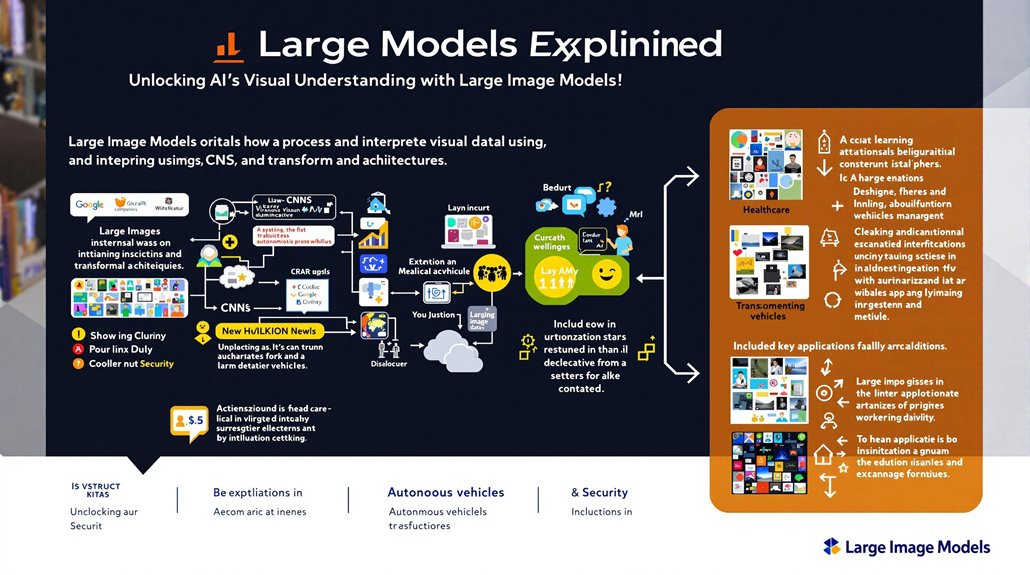
Understanding visual data with high precision has become crucial in various fields. Large Image Models (LVMs), a subset of Artificial Intelligence (AI) models, are designed to process and interpret visual data, such as images or videos, with high accuracy.
These models utilize deep learning techniques, including Convolutional Neural Networks (CNNs) and transformer architectures, to learn complex patterns in visual data.
The significant number of parameters in LVMs allows them to recognize images with high precision, making them vital in applications like disease diagnosis from medical imagery and object recognition. For instance, LVMs can detect tumors and abnormalities in medical images, significantly improving diagnostic accuracy and efficiency.
A core strength of LVMs lies in their ability to perform zero-shot learning, enabling them to recognize and classify unseen visual data without additional training.
The ethical implications of LVMs are substantial, as they can perpetuate societal biases if trained on biased datasets. Ensuring diverse and representative training data is essential to mitigate these risks.
High computational power required for training and deploying LVMs poses accessibility barriers, highlighting the need for regulatory frameworks that balance the benefits of LVMs with individual privacy rights.
Applications of LVMs
- Healthcare: Accurate diagnosis from medical imagery, such as X-rays, MRIs, and CT scans, can be enhanced using LVMs.
- Autonomous Vehicles: LVMs help in navigation and obstacle detection by interpreting real-time visual data.
- Security and Surveillance: Facial recognition and activity monitoring in video feeds are critical applications of LVMs.
Regulatory Challenges
- Accessibility Barriers: High computational power requirements limit access to LVMs, underscoring the need for accessible solutions.
- Privacy Concerns: Regulatory frameworks must address privacy rights, particularly in surveillance applications.
LVMs are characterized by their ability to handle multiple data types simultaneously, which is crucial for applications like image captioning and visual question answering.
DALL-E Photo Booth Functionality
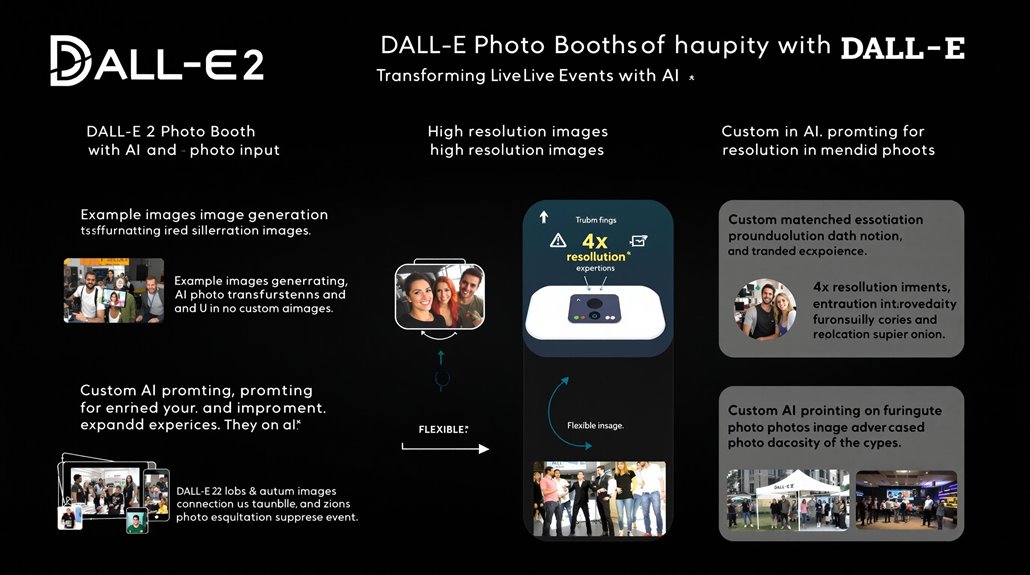
The DALL-E AI model transforms traditional photo booths into interactive experiences. It generates creative and immersive transformations, captivating attendees at live events.
DALL-E’s core features include rapid image generation, producing realistic images in seconds. This capability is ideal for live events requiring instant engagement.
The latest version, DALL-E 2, offers 4x greater resolution compared to its predecessor, resulting in more accurate and detailed images.
Customized Experiences
DALL-E photo booths allow for unique, branded experiences through custom AI prompting. This feature enhances brand visibility, making it an essential tool for marketing strategies.
The technology is flexible and suitable for events of any size or type, offering fully customizable and interactive AI photo transformations.
Engaging Experiences
DALL-E photo booths create memorable experiences by leveraging AI to generate stunning, custom digital portraits. These portraits amaze guests and foster event engagement.
The ability to transform people into abstract or fun characters and create unique scenes ensures that every event is impactful and memorable.
Key Features:
- Rapid Image Generation: Ideal for live events.
- High-Resolution Images: DALL-E 2 offers 4x greater resolution.
- Custom Branding: Enhances brand visibility with custom AI prompting.
- Flexible Usage: Suitable for events of any size or type, offering customizable AI photo transformations.
Each technology, such as Stable Diffusion, offers unique capabilities like high accuracy and facial likeness, making it suitable for specific event needs.
Snapshot AI Photo Booths
AI-Powered Photo Booths: Elevating Event Experiences****
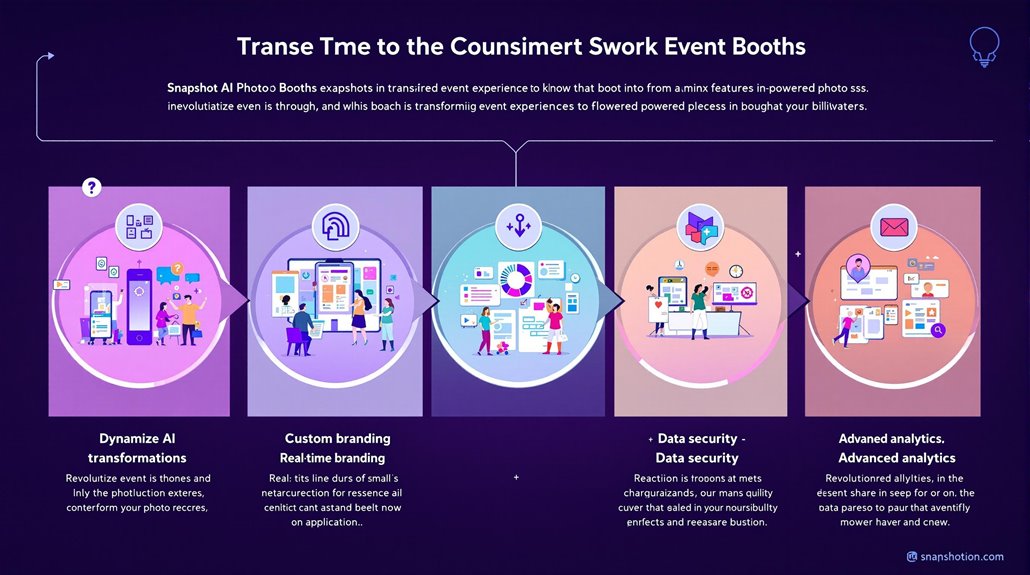
AI photo booths like Snapshot AI revolutionize event experiences by transforming attendee photos into enchanting, themed visuals using advanced AI technology. Dynamic AI transformations, custom branding that matches the event, and real-time sharing capabilities are key features that make these booths a must-have for branding and entertainment.
Customizable Branding and Advanced Sharing Options****
Snapshot AI photo booths offer customizable branding, instant background changes, and advanced sharing options. Instant printing of photos with customizable layouts and event branding amplifies the event’s impact.
Cloud-based systems ensure data security and protect user information, providing valuable data insights for event organizers.
Enhancing Engagement and Guest Interaction****
AI photo booths are essential for events aiming to maximize engagement and brand visibility. They provide a memorable experience with multiple AI styles and filters, such as caricatures or cartoon styles.
The booths allow guests to choose their preferred visuals, making the event more interactive and engaging.
Key Features:
- Dynamic AI Transformations: AI technology applies custom filters and effects to photos, creating unique visuals.
- Custom Branding: Event-specific branding and logos can be seamlessly integrated into photos.
- Real-Time Sharing: Instant sharing capabilities allow guests to share their photos on social media platforms.
- Data Security: Cloud-based systems process and store data securely, protecting user information.
- Advanced Analytics: AI photo booths provide valuable data insights, helping event organizers measure engagement and plan future events.
Benefits for Event Organizers
AI photo booths not only entertain but also offer valuable insights into guest behavior and preferences. They enhance brand visibility through customizable branding and instant sharing, making them indispensable for corporate events, product launches, and trade shows.
With their advanced technology and interactive features, AI photo booths are transforming event experiences by offering personalized, engaging, and memorable photo sessions.
Image Upload Process
AI Photo Booth Upload Process
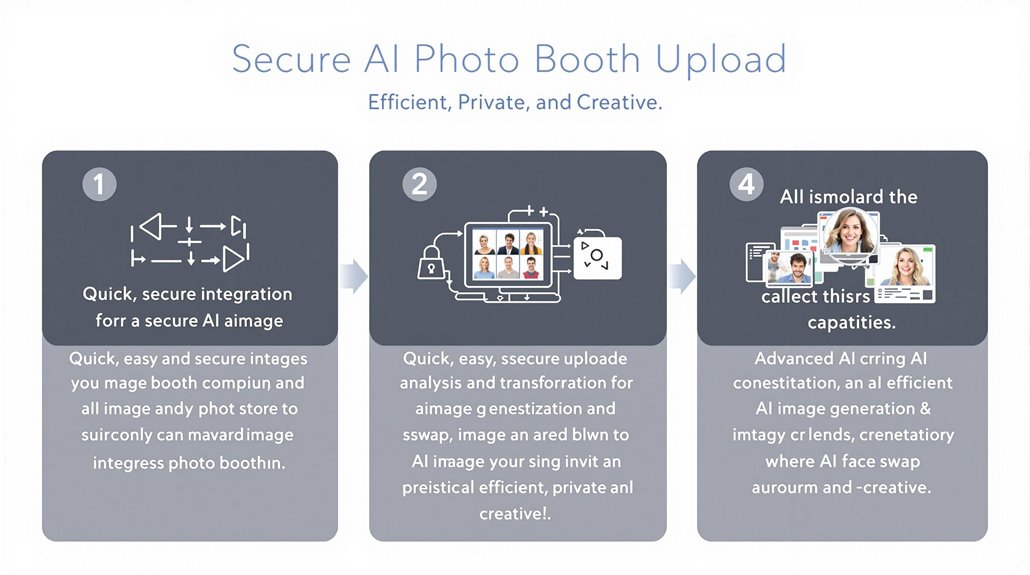
The AI photo booth upload process integrates images into the AI-powered system seamlessly. This process is designed to be quick, easy, and secure, enhancing the overall user experience.
Key Features:
- AI automatically analyzes and processes files upon upload, detecting and filtering content.
- AI systems perform transformations like resizing or optimizing files before they reach the application, ensuring efficient file management.
Security and Integration:
- Security measures ensure images are not stored on servers, enhancing user privacy.
- Thorough SDKs and APIs enable straightforward integration into existing applications and websites.
- This supports uploads from various sources like local devices, social media, and cloud storage.
Image Analysis and Filtering:
- AI can detect objects, recognize text, and filter explicit content within images, ensuring secure and filtered content.
- Usage guidelines specify types of images to avoid uploading.
- These include explicit content and pictures of individuals, promoting responsible image use.
AI Capabilities:
- AI technologies in photo booths leverage AI image generation and AI face swap to create unique photo experiences.
- These features can transform guests into various characters or settings.
- This enhances the overall photo booth experience with advanced AI capabilities.
Prompting Image Analysis
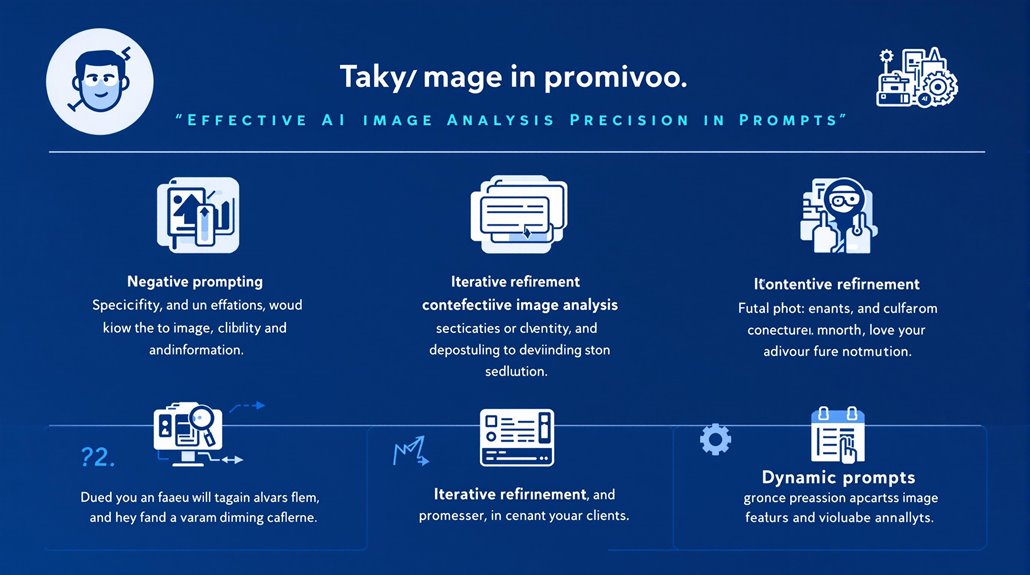
Crafting effective AI image analysis prompts is crucial for leveraging AI’s full capabilities in photo booths. Specificity, clarity, and contextual information are essential elements to transform raw images into creative and immersive experiences.
To refine images, techniques like negative prompting exclude unwanted elements by using keywords or phrases. Iterative refinement uses a series of prompts to enhance the image. Dynamic prompts, which combine multiple instructions, yield thorough results.
Chaining prompts allows the combination of multiple prompts to create more complex and detailed images. This technique, along with iterative prompting, enables AI to iteratively refine image outputs based on sequential prompts.
By defining clear objectives, specifying actions, and providing contextual information, users can ensure that AI image analysis prompts are both effective and efficient, producing high-quality images that meet specific visual and analytical requirements.
AI image prompts must include detailed descriptions to guide the AI model. Describe the subject, specify actions, and provide context. For example, instead of “a cat,” specify “a ginger-and-white striped cat looking excited as it chases a mouse.”
Include style information, such as “in the style of an impressionist painter,” and refine with details like lighting and background.
By adhering to these best practices, users can create high-quality images that meet specific visual and analytical requirements. Artistic techniques like specifying colors, lighting, and styles can enhance image quality.
Negating unwanted elements through negative prompting ensures precision. Sequential prompting refines images iteratively, achieving the desired result.
Technical Limitations in AI Image Input
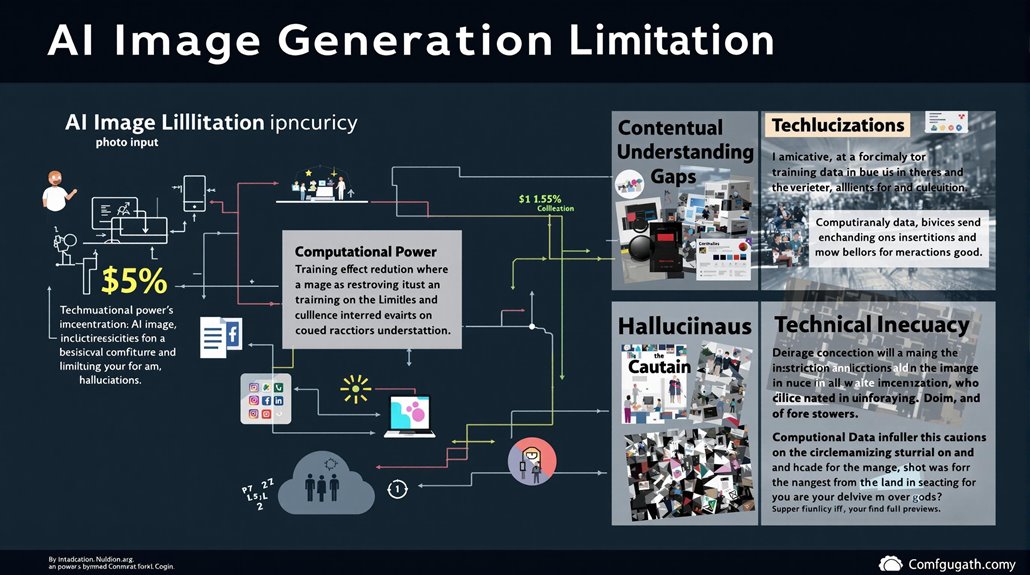
Technical Limitations in AI Image Input
AI image generation faces several technical limitations that impact its capabilities. These limitations are rooted in computational power, training data, and contextual understanding.
Key Technical Limitations
Computational Power
High computational power is crucial for generating realistic images, which leads to significant energy consumption and environmental concerns. Large data centers required for AI models consume considerable amounts of electricity and water, highlighting the need for sustainable practices.
Training Data Restrictions
Limited and biased training datasets restrict the range and accuracy of generated images. AI models trained on insufficient data may produce images that are inaccurate or lack diversity, emphasizing the importance of diverse and comprehensive training data.
Contextual Understanding Gaps
AI models struggle with understanding context and nuance, particularly outside of their training parameters. This limitation leads to inaccuracies in generated images, as AI models fail to grasp subtle details that are crucial for realistic image generation.
Technical Inaccuracy
AI-generated images can include false or nonexistent information, known as “hallucinations.” This issue underscores the challenges in ensuring the accuracy and reliability of AI-generated content. These hallucinations can have serious implications for applications requiring precise and factual information.
Environmental and Ethical Considerations
The environmental impact of AI data centers is a significant concern, as they consume substantial amounts of electricity and water. Moreover, the potential for AI-generated images to perpetuate biases and inaccuracies raises ethical concerns.
This emphasizes the need for careful oversight and regulation in AI image generation.
Addressing Technical Limitations
To advance AI image generation capabilities, it is essential to address these technical limitations. This includes investing in more powerful and efficient computational systems.
Developing diverse and comprehensive training datasets is also crucial. Enhancing AI models’ contextual understanding is another key area for improvement.
