

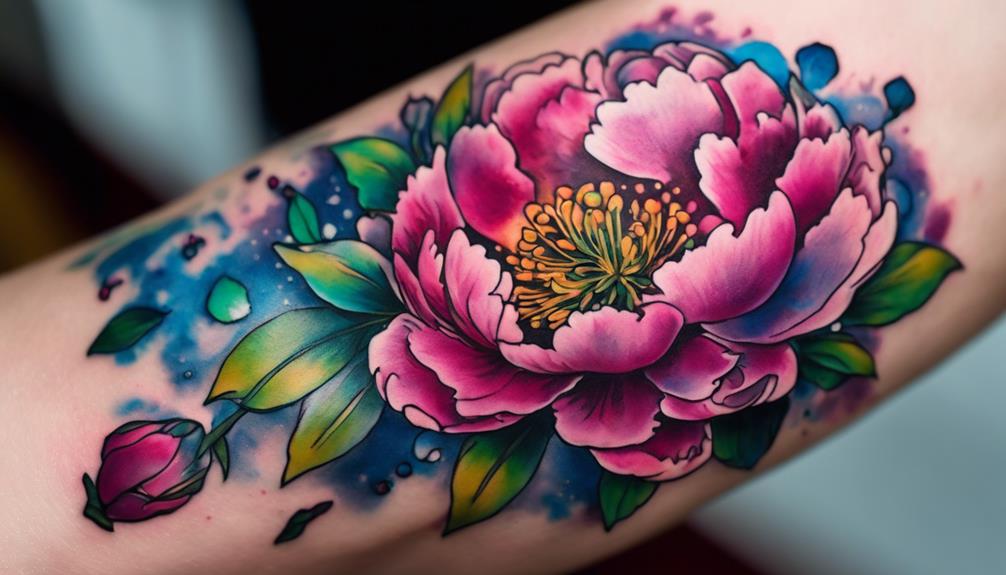
Watercolor flower tattoos require careful consideration. Choose a flower that speaks to you personally and visually.
Find an artist skilled in watercolor techniques for the best results.
Placement and size impact the tattoo's overall effect. Study color theory to create harmonious designs that pop. Bring clear reference images to your appointment for guidance.
Proper aftercare ensures optimal healing. Protect your tattoo from sun damage and schedule regular touch-ups to maintain its vibrancy over time.
These steps help create a stunning, long-lasting watercolor tattoo. Each aspect contributes to the artistry of this unique style on your skin.
Understanding the intricacies of watercolor tattoos opens up a world of creative possibilities. This style allows for expressive and fluid designs that mimic painted art.
Key Takeaways
- Choose a skilled artist with watercolor experience.
- Select flowers that suit watercolor styles naturally.
Choose the Right Flower
Choosing Your Floral Design
The flower you select for your watercolor tattoo sets the tone for the entire design. Consider the symbolism and shape of different blooms. Roses represent love, while lilies symbolize purity. Peonies and orchids offer intricate shapes that work well with watercolor techniques.
Collaborate with your tattoo artist to find the best floral option. Sunflowers and daisies provide bold outlines that pair nicely with subtle color washes. Cherry blossoms and forget-me-nots naturally embody the dreamy quality of watercolor paintings.
Color Harmony and Personal Meaning
Think about how the flower's natural colors will blend within the tattoo. The goal is to create a harmonious composition that captures the essence of both the bloom and the watercolor style. Your chosen flower should reflect your personal story while allowing for artistic expression.
Bold and Recognizable Silhouettes
Some flowers lend themselves better to the watercolor style due to their distinctive shapes. These bold outlines can be enhanced with soft color transitions, creating a striking contrast. Consider how the flower's form will translate to skin and maintain its recognizability over time.
Blending Technique and Floral Choice
The watercolor technique used in your tattoo will depend partly on your flower choice. Some blooms allow for more abstract interpretations, while others require more defined lines. Discuss with your artist how different flowers might influence the application method and overall effect of the tattoo.
Select a Skilled Artist
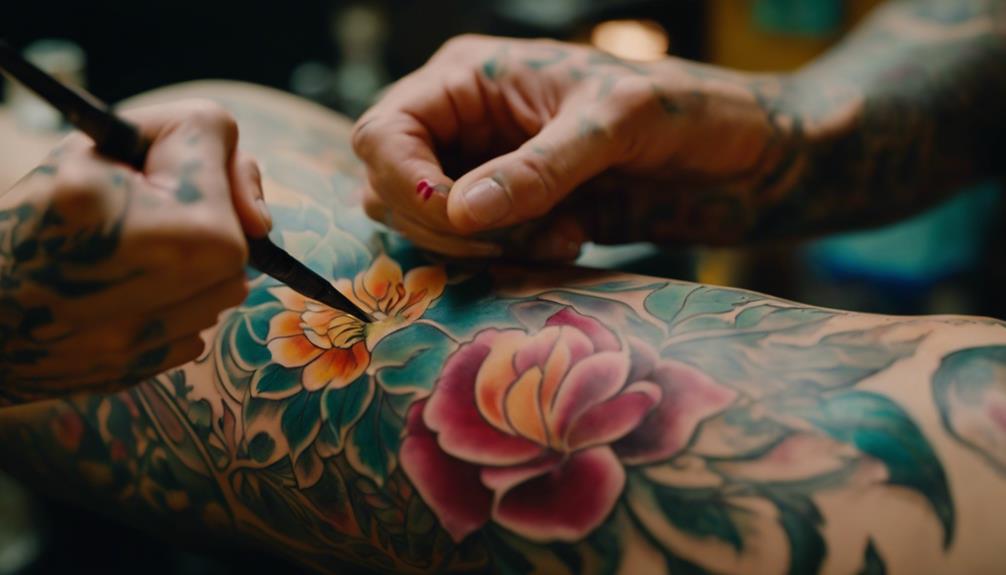
Choosing the Right Tattoo Artist
Finding a tattoo artist who excels in watercolor-style designs is crucial for your floral tattoo. Look for professionals with extensive experience in this technique. Review their portfolios, focusing on floral works that showcase their ability to capture delicate, ethereal beauty. Research the artist's reputation thoroughly. Read client reviews and ask for recommendations from people who have gotten tattoos from them. Ensure the artist is licensed and has a deep understanding of watercolor tattooing techniques.
Discuss the Creative Process
Talk to potential artists about their approach to watercolor tattoos. Ask about their preferred inks, equipment, and methods for achieving the desired look. A great artist will blend technical skill with artistic vision to create a custom design that matches your style.
Collaboration is Key
Work closely with your chosen artist to refine your floral design. Their expertise can help bring your vision to life while ensuring the tattoo will age well. By selecting an artist who shares your passion for watercolor floral tattoos, you're setting yourself up for a stunning piece of body art.
Consider Placement and Size
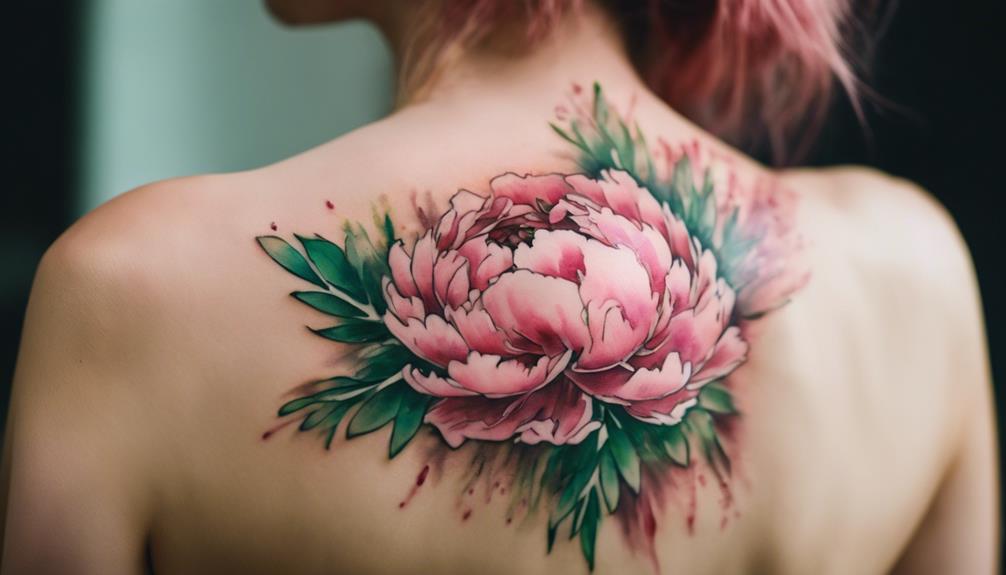
Choosing the right spot for your watercolor flower tattoo matters.
Your body's shape can enhance the tattoo's soft, flowing look. The tattoo's size affects how much detail it can show.
Where you put your tattoo changes how people see it.
The bright colors and gentle edges of watercolor designs interact differently with your overall look depending on their placement.
Consider these factors carefully when planning your tattoo.
Body Contours Enhance Design
Watercolor flower tattoos blend seamlessly with the body's natural shape, creating a living artwork. Careful placement and sizing transform these designs into an extension of the wearer's form.
Smaller areas like wrists and ankles suit delicate floral patterns. These spots allow the tattoo to follow the body's lines, merging art with anatomy.
Larger areas such as arms, legs, or backs provide room for intricate compositions. Here, the fluid watercolor technique can fully express itself, resulting in stunning, expansive designs.
The relationship between tattoo and body is crucial. Well-placed designs appear to grow naturally from the skin, enhancing the wearer's physical features.
Artists and clients work together to create unique tattoos that complement individual physiques. This collaboration ensures a personalized aesthetic that resonates with the wearer's style and personality.
Size Affects Detail Level
Tattoo size significantly impacts detail in watercolor flower designs. Larger tattoos provide more space for artists to showcase intricate techniques, allowing for complex floral compositions and detailed petal structures. These bigger pieces can capture subtle color gradients and shading that mimic real flowers.
Smaller watercolor tattoos require a different approach. Artists must simplify the floral design while maintaining the fluid watercolor style. They focus on bold colors and simplified shapes to create impactful designs in a compact form.
The chosen size affects the tattoo's personal meaning and visual impact. A small piece might serve as a subtle accent, while a larger work becomes a prominent feature. The size should align with the wearer's vision and the intended effect of the tattoo.
Placement and size work together to create the overall aesthetic. Consider how the tattoo will look on different body parts and how it may change with time. Consult with an experienced tattoo artist to determine the best size and placement for your watercolor flower design.
Visibility Impacts Overall Effect
Watercolor flower tattoos' visibility significantly influences their aesthetic appeal.
Placement and size determine how these designs interact with the body's natural shape. Body contours affect watercolor tattoos' appearance, offering unique ways to express oneself through strategic positioning.
Smaller areas like wrists or ankles suit delicate designs, while arms and backs provide space for intricate, colorful pieces. Ribcage and hip areas complement fluid, organic watercolor designs naturally.
The size of a tattoo affects the level of detail possible, with smaller pieces often requiring impressionistic techniques to capture the watercolor effect. Larger tattoos may need multiple sessions and regular maintenance to preserve their vibrancy.
The choice of placement and size allows for personal expression, whether opting for subtle or bold designs.
Understand Color Theory
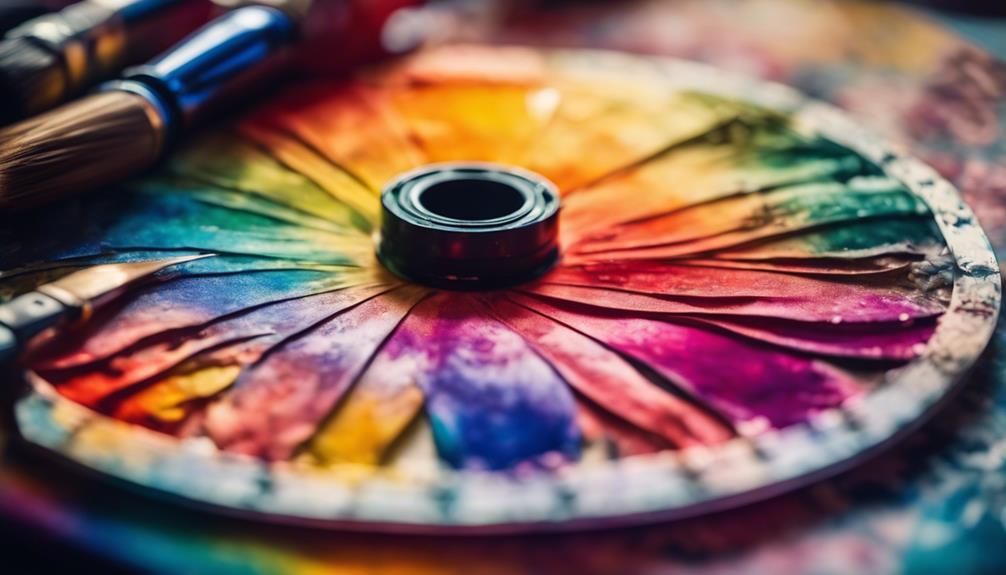
Color Theory: The Foundation of Watercolor Flower Tattoos
Understanding color theory is crucial for creating beautiful watercolor flower tattoos. Artists use this knowledge to blend hues, evoke emotions, and design visually appealing tattoos that connect with both wearers and viewers.
The color wheel is a key tool in watercolor tattoo artistry. It shows how different hues relate to each other, including their saturation and value. This information helps artists make tattoos that draw the eye and touch the heart.
Harmony in tattoo design often follows the 60-30-10 rule. This means using 60% of a main color, 30% of a secondary color, and 10% of an accent color. The result is a balanced and pleasing composition.
Contrast adds depth to watercolor flower tattoos. Artists use warm and cool tones, light and dark values, and different levels of color intensity to create dimension. This interplay of colors makes the tattoo more interesting and lifelike.
Monochromatic and analogous color schemes offer unique design possibilities. These approaches create cohesive tattoos that flow smoothly across the skin. They showcase the artistry of watercolor tattoos in a sophisticated way.
Prepare for the Session
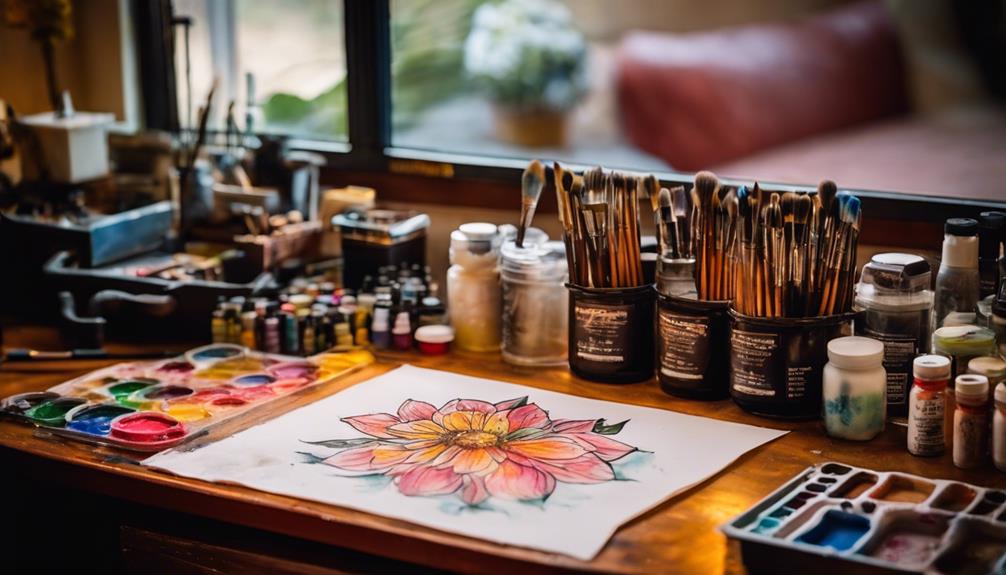
Preparing for Your Watercolor Flower Tattoo
Clean your skin thoroughly before the appointment. Remove all lotions, oils, jewelry, and loose hair to create an ideal surface for the tattoo artist.
Bring clear reference images to your session. These visuals will help communicate your ideas effectively to the artist, ensuring they understand your vision.
Be prepared for a longer appointment. Watercolor tattoos often require more time due to their intricate nature and attention to detail.
Communicate openly with your artist during the process. Let them know about your comfort levels and any concerns you may have as the tattoo progresses.
Consider the placement of your tattoo carefully. Some areas of the body may be more sensitive or prone to fading, which can affect the longevity of your watercolor design.
Stay hydrated and eat a meal before your appointment. This helps maintain your energy levels and reduces the risk of feeling lightheaded during the session.
Wear comfortable, loose-fitting clothes. Choose attire that allows easy access to the area being tattooed while keeping you relaxed throughout the process.
Follow Proper Aftercare
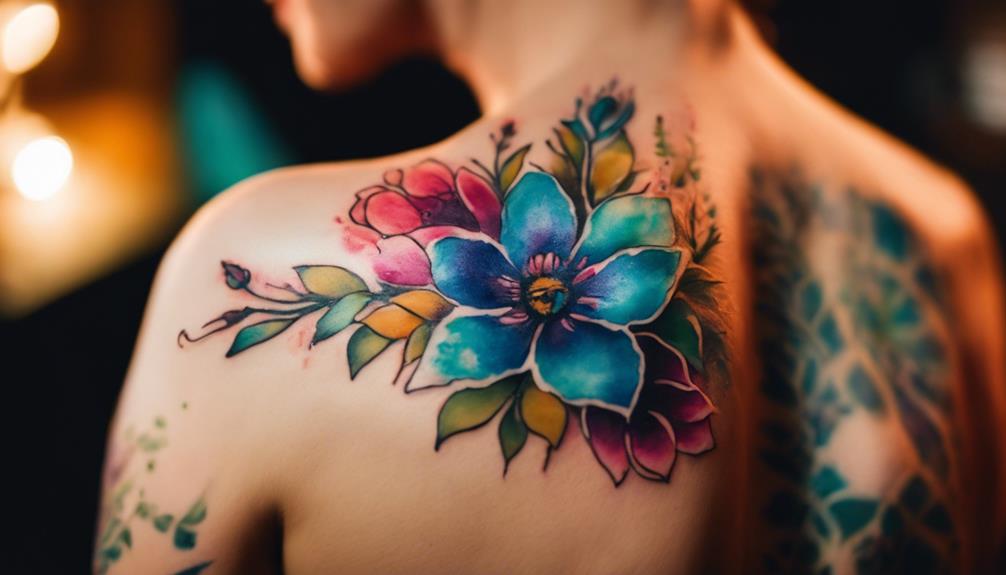
Clean your new tattoo with mild soap and dry it gently. This prevents bacteria growth and promotes healing.
Apply a thin layer of ointment or aftercare product 2-3 times daily to protect and hydrate the tattoo.
Avoid submerging the tattoo in water or exposing it to direct sunlight during the initial healing period. These can affect the pigments and intricate details of your floral design.
Moisturize and protect your tattoo from harsh elements as it heals.
Schedule regular touch-ups with your artist to maintain the vibrancy of your watercolor flower tattoo. This helps refresh any faded areas and keeps your living art looking its best.
Consistent care ensures your tattoo remains a beautiful, long-lasting piece.
Maintain Vibrancy Over Time
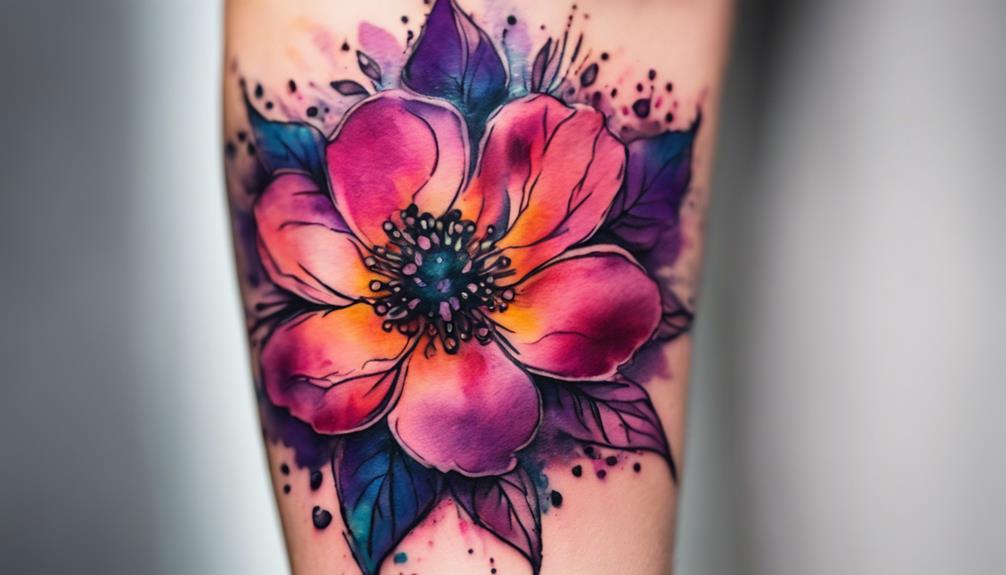
Preserving Watercolor Tattoo Vibrancy
After initial healing, maintaining your watercolor flower tattoo requires ongoing care.
These tattoos, known for soft edges and pastel colors, need extra attention to stay vivid.
Regular touch-ups help fight fading, which happens faster in watercolor designs.
Protect your tattoo from sun damage by applying broad-spectrum sunscreen daily.
Use fragrance-free soap for cleaning and keep the area moisturized.
Avoid harsh chemicals and rough scrubs that can damage the delicate color blends.
Check with your tattoo artist periodically to assess the tattoo's condition and refresh any faded areas.
These steps help ensure your watercolor flower tattoo remains a beautiful, lasting piece of art on your skin.
Frequently Asked Questions
What Are the Downsides of Watercolor Tattoos?
- Watercolor tattoos fade quickly and require frequent touch-ups.
- Colors may shift or bleed, causing designs to blur.
How to Care for a Watercolor Tattoo?
- Clean tattoo gently with mild soap and water daily.
- Apply moisturizer to keep skin hydrated and colors vibrant.
What Is the Prettiest Flower to Get Tattooed?
- Rose tattoos symbolize love and beauty in many cultures.
- Sunflowers represent happiness and positivity in tattoo art.
Flower tattoos reflect personal meaning and aesthetic preferences. Rose petals convey romance, while sunflowers exude joy. Daisies symbolize innocence, and lilies embody elegance. Violets add mystery, poppies showcase passion. Peonies offer delicate charm, hibiscus brings tropical flair. Orchids display refined grace, carnations represent enduring affection.
What Does the Watercolor Flower Tattoo Mean?
- Floral tattoos blend personal meaning with artistic expression.
- Watercolor designs connect wearers to nature's subtle beauty.
