
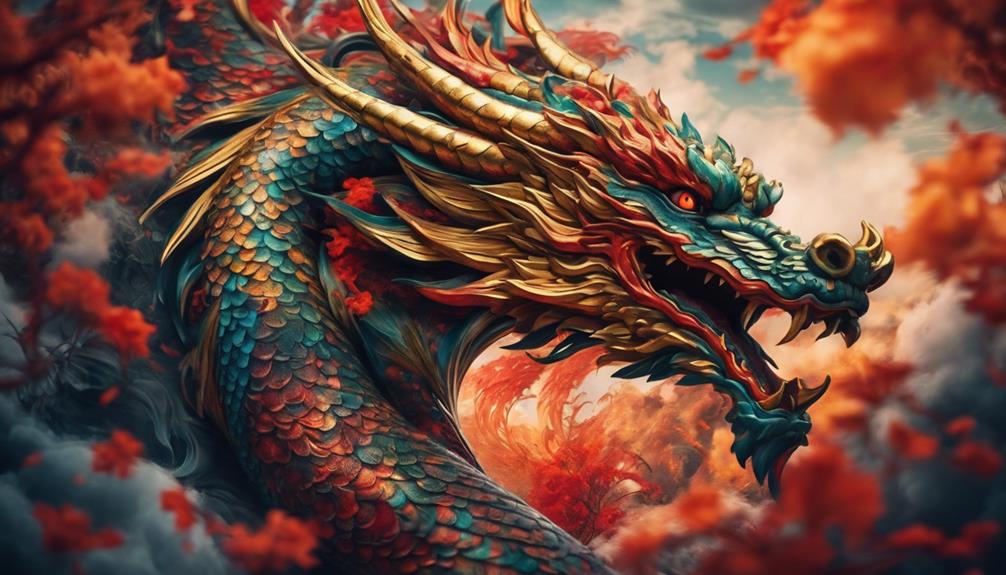
Japanese forearm dragon tattoos have become increasingly popular for their deep cultural significance.
These designs blend ancient traditions with modern styles, representing strength, wisdom, and spiritual power.
The forearm offers an ideal spot for detailed dragon tattoos, allowing for both visibility and easy covering.
In Japanese art, dragons symbolize good fortune and benevolence, making them appealing for those seeking meaningful body art.
This tattoo placement strikes a balance between personal expression and professional appearance.
The artistry involved showcases exceptional skill in fine line techniques, highlighting the mythological importance of dragons.
Many people choose these tattoos for their ability to tell a story through intricate scales and flowing forms.
The popularity of Japanese forearm dragon tattoos continues to grow as more individuals seek unique ways to express themselves through body art.
Table of Contents Toggle
- Key Takeaways
- Symbolism of Japanese Dragon Tattoos
- Design Elements and Aesthetics
- Cultural Significance and History
- Placement and Visibility Considerations
- Customization and Personal Meaning
- Artistry and Tattoo Techniques
- Frequently Asked Questions
Key Takeaways
Forearm tattoos blend visibility with easy covering, suiting various situations.
Dragon designs on forearms symbolize strength and good fortune.
Symbolism of Japanese Dragon Tattoos
Japanese Dragon Tattoos: A Symbol of Power and Wisdom
Japanese dragon tattoos represent a fusion of strength, wisdom, and spiritual power.
These tattoos, known as 'ryū,' embody centuries of cultural significance and mythological heritage.
Unlike Western dragons, Japanese dragons are seen as benevolent creatures, often linked to water, abundance, and good fortune.
The design of Japanese dragon tattoos typically features serpentine bodies, fierce expressions, and intricate scales.
Each element carries specific meaning.
The dragon's claws, usually three or four, represent its ability to adapt to different domains: sky, earth, and sea.
A pearl often appears in the dragon's grasp, symbolizing wisdom and tidal power.
In Japanese tradition, dragons are associated with seasons and directions.
For example, the azure dragon of the East represents spring and new beginnings.
Choosing a Japanese dragon tattoo connects individuals to a rich tradition of symbolism and spiritual significance.
Design Elements and Aesthetics
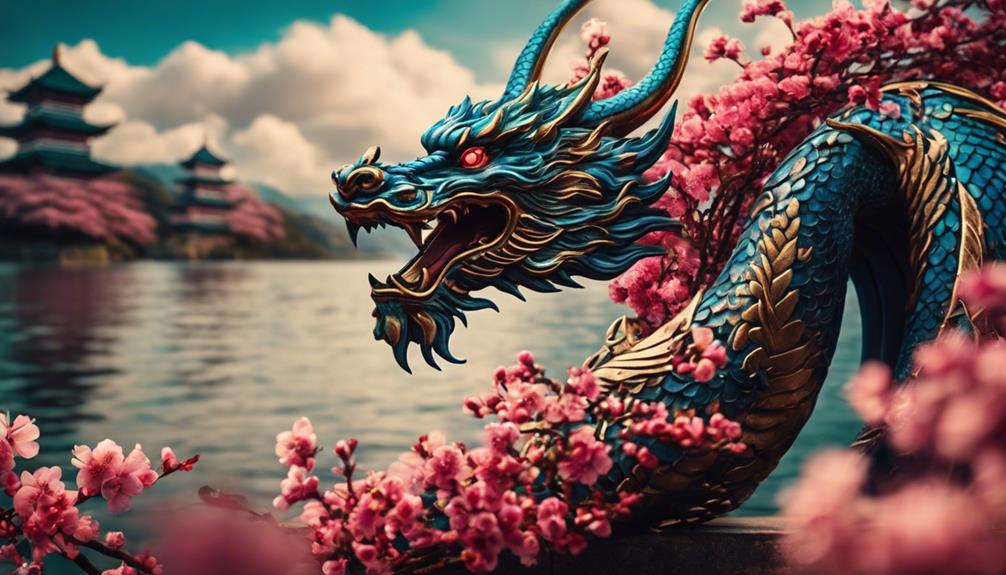
Japanese Dragon Tattoos: Artistry on the Forearm
Artists blend ancient symbolism with modern techniques when creating Japanese dragon tattoos for the forearm. These designs often show the dragon's body coiling around the arm, highlighting the wearer's bravery.
Detailed scales, claws, and eyes bring the mythical creature to life.
Color choices matter: black represents wisdom, green signifies nature, and gold or yellow symbolizes prosperity.
The dragon's direction holds meaning too. Upward-facing dragons show ambition, while forward-facing ones represent protection.
Fine line techniques are gaining popularity, requiring exceptional skill to create delicate yet impactful designs.
These artistic choices result in tattoos that are visually striking and rich in cultural significance.
Many people choose these tattoos to express their personal values or connect with Japanese mythology.
Cultural Significance and History
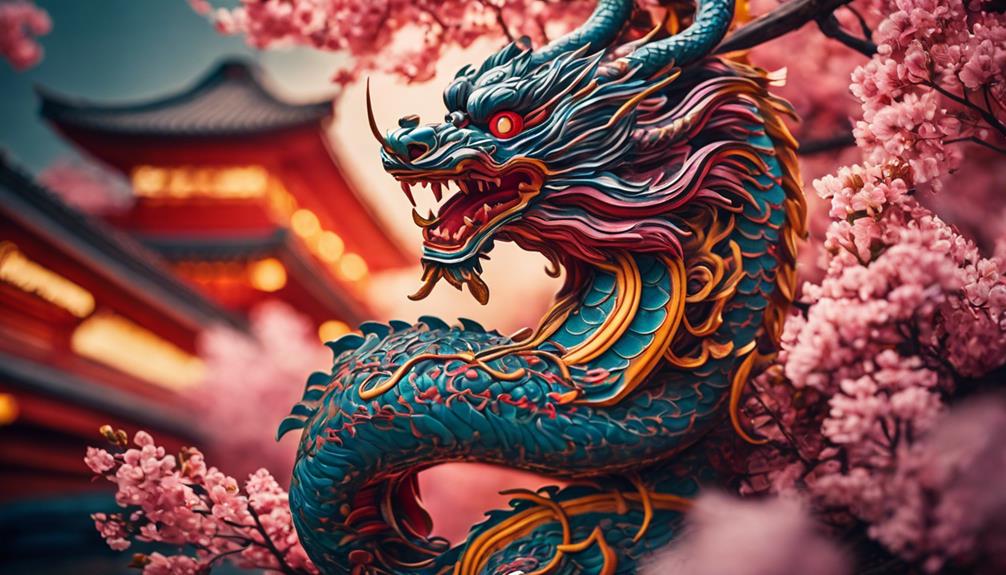
Japanese forearm dragon tattoos hold deep cultural significance, rooted in ancient myths and legends. They symbolize power, strength, and protection, drawing from centuries-old artistic traditions that blend Chinese influences with uniquely Japanese elements.
During Japan's Edo period, dragon tattoos became especially important among firefighters. They believed these intricate designs would guard them against flames, showcasing the enduring spiritual and protective qualities associated with this body art.
Dragon imagery in Japanese culture often connects to the sea and natural elements. The evolution of these tattoo designs reflects the rich history and artistic development of Japan, incorporating both traditional symbolism and modern interpretations.
The popularity of Japanese dragon tattoos extends beyond their historical context. Today, people worldwide choose these designs for their aesthetic appeal and the powerful meanings they convey, bridging ancient traditions with contemporary tattoo culture.
Ancient Myths and Legends
Dragons hold a special place in Chinese and Japanese mythology. These creatures symbolize wisdom, strength, and protection in Eastern folklore, shaping traditional art and tattoo designs.
Japanese Mythology and Dragons
The tale of Yamata-no-Orochi, an eight-headed serpent, forms the basis of dragon symbolism in Japan.
Unlike their Western counterparts, Japanese dragons are often seen as helpful beings living in oceans, clouds, or heavens.
Dragon Symbolism in Japan
During Japan's Edo period (1603-1863), dragons became more prominent in stories.
They represented nature's power and the spiritual world, helping humans rather than harming them.
Symbolism in Japanese Art
Japanese Dragons: Symbols of Wisdom and Power
Dragons hold significant cultural importance in Japanese art. These mythical creatures, known as Ryū, are depicted with three toes and a benevolent nature, often shown riding clouds or living in heavenly realms.
During the Edo period (1603-1863), dragons became associated with imperial power and heroic figures. Their connection to the sea and ability to transcend earthly elements strengthened their role in Japanese folklore.
Ukiyo-e woodblock prints frequently featured these majestic beings, highlighting their ties to water and the sky. The symbolic relationship between dragons and koi fish in Japanese culture represents perseverance and transformation.
As creatures believed to offer strength of character and protection, dragons maintain a revered position in Japanese artistic expression. They serve as powerful emblems of wisdom, freedom, and strength in both historical and modern contexts.
Japanese artists continue to incorporate dragon imagery in various forms of art. From traditional paintings to contemporary designs, these mythical beings inspire creativity and cultural pride.
Edo Period Firefighter Traditions
Edo period firefighter traditions blend spirituality, bravery, and artistic expression.
Hikeshi, or firemen, adorned their bodies with dragon tattoos, serving as protective talismans against flames. These intricate designs held deep spiritual meaning. Firemen believed the dragon's spirit awakened once its eyes were inked, giving them strength and respect for tradition.
The practice of full-body tattooing demonstrated courage and fearlessness. Hikeshi endured pain, showcasing their defiance in the face of danger.
Mount Oyama became a significant pilgrimage site for firemen. They sought enlightenment and protection at its purifying waterfalls.
The 20th century saw the establishment of the Kanda Choyu Kai, Japan's pioneering tattoo club. This organization solidified the enduring legacy of dragon tattoos in Japanese firefighting culture.
Placement and Visibility Considerations
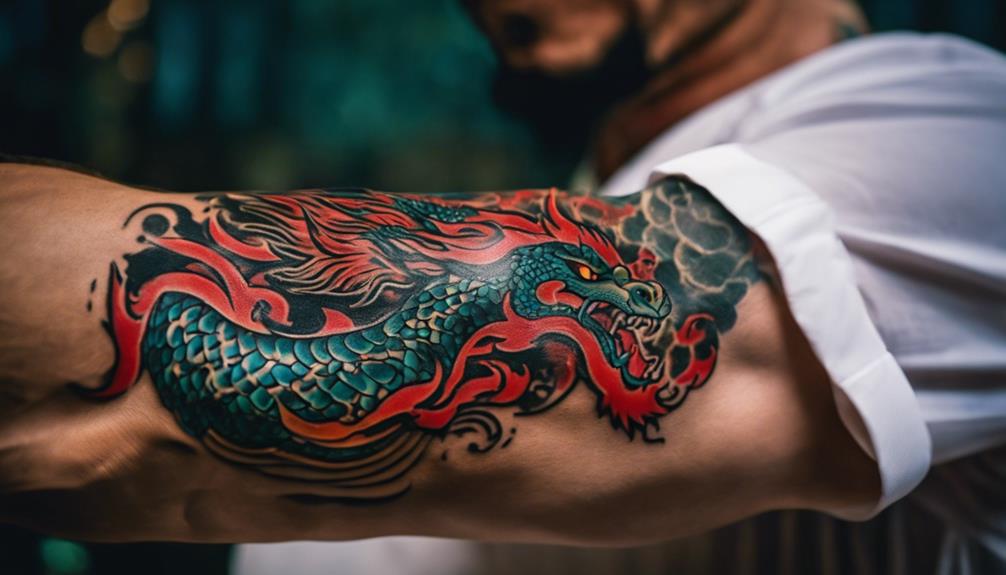
Forearm tattoos of Japanese dragons offer a perfect mix of visibility and adaptability.
The arm's shape and size provide an excellent canvas for detailed scales and flowing dragon forms, allowing easy viewing and subtle showing off.
Many people choose forearm tattoos because they're considered less painful than other body areas.
This spot lets individuals display the dragon's power and wisdom without excessive discomfort during the tattooing process.
Forearm Canvas Versatility
Japanese forearm dragon tattoos offer numerous placement options on this versatile canvas.
The elongated surface provides space for intricate designs, incorporating traditional elements like clouds or cherry blossoms alongside the dragon. Artists can create a three-dimensional effect by wrapping the design around the forearm.
The forearm's visibility can be easily managed. Long sleeves conceal the tattoo in professional settings, while short sleeves display it when desired.
This balance between personal expression and societal norms makes the forearm an ideal location for many tattoo enthusiasts.
Considering the natural contours of forearm muscles is crucial when placing the design. These contours can enhance the dragon's flowing form.
Skilled artists account for the arm's curvature and movement, ensuring the tattoo maintains its visual impact in various positions.
The forearm's unique properties allow for a harmonious fusion of body and art.
This placement creates a dynamic and eye-catching result, bringing the mythical dragon to life on the wearer's skin.
The combination of visibility control and ample canvas space makes forearm dragon tattoos a popular choice among Japanese tattoo aficionados.
Daily Visibility Impact
Forearm Japanese Dragon Tattoos: Visibility and Impact
Forearm dragon tattoos are highly visible, showcasing intricate designs daily. This placement allows for constant expression of one's appreciation for Japanese art and symbolism.
Professional environments may present challenges for those with visible tattoos. Some workplaces require covering tattoos, often necessitating long sleeves. It's wise to consider career goals and social norms before choosing this placement.
Proper care is essential for forearm tattoos due to their exposure. Sun and environmental factors can fade designs over time. Tattoo wearers often use protective measures to maintain vibrancy and detail.
The decision to get a forearm dragon tattoo requires careful thought. Consider personal style, professional aspirations, and long-term commitment to care. Consulting with experienced tattoo artists can provide valuable insight into design and placement options.
Pain Tolerance Factor
Pain Tolerance and Forearm Dragon Tattoos
Choosing a forearm dragon tattoo requires careful consideration of pain tolerance.
The forearm's sensitivity, rated 6-7 out of 10, offers a balanced experience for those with average pain thresholds. Thin skin and minimal fat make the forearm sensitive during tattooing. However, the lack of prominent bones helps manage discomfort.
This combination allows for detailed dragon designs that follow the arm's natural shape. The forearm's pain factor relates to tattoo visibility. Adjustable sleeve lengths let wearers control when to show their art.
This mix of endurance and display options makes Japanese forearm dragon tattoos popular among tattoo enthusiasts. Tattoo artists often recommend the forearm for first-timers due to its moderate pain level.
The area's consistent surface also helps create smooth, flowing dragon designs. Many clients find the forearm's pain manageable compared to other body parts.
The forearm's accessibility for both the artist and client contributes to its popularity. Easy positioning during sessions allows for precise work and shorter sitting times.
This can be especially beneficial for intricate dragon designs that require multiple sessions.
Customization and Personal Meaning
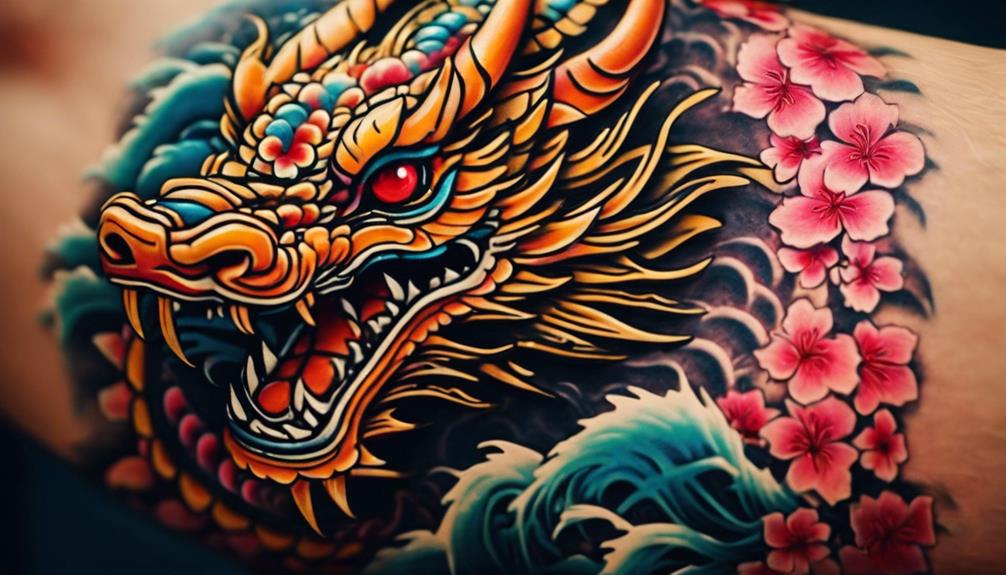
Japanese forearm dragon tattoos offer a canvas for personal expression. These designs allow individuals to incorporate their unique stories and symbolism into intricate artwork.
Each tattoo becomes a distinctive piece that deeply resonates with its wearer. The dragon, a powerful symbol in Japanese mythology, can represent various personal attributes or life experiences.
An ascending dragon might represent ambition or overcoming challenges. A serpentine dragon could symbolize wisdom or adaptability.
Color choices enhance the tattoo's significance. Red can signify passion or courage, while blue might evoke calmness or spiritual growth.
Adding elements like cherry blossoms, waves, or clouds creates layers of meaning. These additions reflect the wearer's connection to nature or specific cultural values.
The placement and flow of the dragon on the forearm can complement body shape. This creates a harmonious blend of art and anatomy that tells a unique personal story.
Artistry and Tattoo Techniques
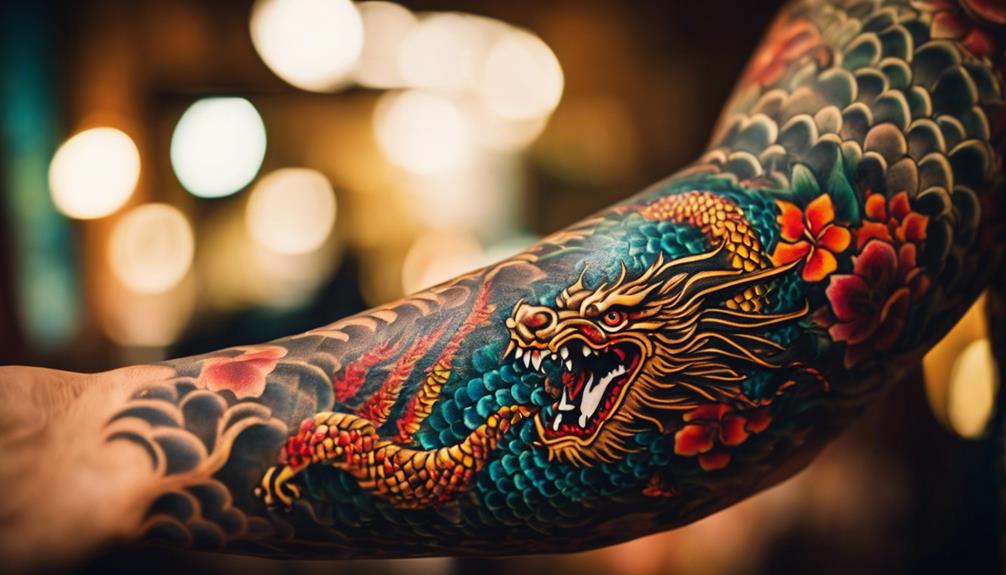
Japanese forearm dragon tattoos showcase exceptional artistry. They utilize fine line techniques to capture intricate details of scales, claws, and facial features. This approach creates visually striking designs that highlight the dragon's power and mythological significance.
Traditional Japanese tattoo practice incorporates elements like wind, fire, and water. These elements represent yin and yang balance within the dragon design, often shown through swirling flames and crashing waves. This adds depth and symbolism to the artwork.
A unique aspect of Japanese tattoo style is leaving the dragon's eyes blank until the end. This practice stems from ancient beliefs, suggesting the dragon's spirit awakens only when its eyes are drawn. It gives the tattoo a sense of mystical energy and cultural authenticity.
Frequently Asked Questions
What Does a Dragon Tattoo on the Forearm Mean?
Dragon tattoos symbolize power and personal identity.
Forearm placement makes the tattoo easily visible.
What Does a Japanese Dragon Tattoo Mean?
Japanese dragons symbolize wisdom, strength, and fortune.
Dragons are seen as divine beings in Japan.
Why Are Forearm Tattoos so Popular?
Forearm tattoos offer visible self-expression and personal style.
Summer clothing showcases forearm ink, adding to casual looks.
Why Are Japanese Tattoos so Popular?
Japanese tattoos symbolize rich cultural traditions.
Designs often represent spirituality, nature, and mythology.