
Table of Contents Toggle
- Photorealism Essentials
- Attention to the Minutest
- The Art of Details
- Key Takeaways
- Painting Hyperrealism With Precision
- Art of Observation
- Techniques for Photorealism
- The Power of Details
- Building Realism Skillset
- Frequently Asked Questions
Photorealism Essentials
To craft remarkable photorealistic works, artists rely on precise techniques, attention to detail, and astute observation.
Photographic references enable the replication of minute details, while layering thin glazes of paint achieves a lifelike finish.
Attention to the Minutest
Mastery of photorealistic skills requires a solid foundation in life drawing and rigorous practice to capture even the smallest details.
Attentive observation involves slowing down to perceive subtle changes in colors and shades, combining both visual and mental elements to accurately represent reality.
The Art of Details
The journey to photorealism demands a high level of precision and dedication.
Effective observation encompassing both visual and mental elements is essential to capture reality accurately.
Key Takeaways
Kelvin scale must be used for lights to ensure accurate color representation.
Light fall-off dramatically affects realism, especially at close distances.
Texture balance is crucial to avoid an over-processed appearance.
Painting Hyperrealism With Precision
To achieve hyperrealism in painting, precise techniques and attention to detail are essential for capturing the subtleties of light, texture, and color. This accuracy is heightened by the use of photographic reference, which allows artists to observe and render even the most minute details.
Realist painting demands exceptional skill in replicating the complexities of the real world, pushing the boundaries of craftsmanship. To create realistic images, artists must slow down and meticulously translate subtle changes in color and shade onto canvas, creating textures and light that convincingly mimic the world we see.
Digital projection technology has advanced to achieve high levels of realism. As a result, artists must continue to develop their skills in capturing every nuance. Techniques that allow for depth and texture, such as layered painting and advanced tools like fine brushes and airbrushes, are critical for achieving the desired level of realism.
Artists in the hyperrealist movement often work with a variety of subjects, including landscapes, inanimate objects, animals, and human portraits, striving to represent reality with precision and objectivity. They use techniques that allow them to create effects of depth, textures, and shadows, creating works of art that are extremely detailed and precise.
Using other people's photographs as references for drawings or paintings is a widely accepted practice. Artists use these references to ensure that important characteristics and details are included in their work. This practice allows for the creation of highly realistic art, which is crucial for hyperrealism.
Art of Observation
Observation is a pivotal aspect in attaining photorealism in art. This process involves meticulous study and replication of the intricate details of light, texture, and color that define the real world.
It requires a keen sense of awareness to distinguish between what is important and what is not. Effective observation encompasses both visual and mental elements, demanding an active approach over a passive one.
To master this skill, artists must quiet their internal biases and emotional influences, allowing themselves to perceive the subject objectively.
This detached perspective enables the discerning of specific characteristics and patterns that often go unnoticed by casual observation.
Artists can develop the attention to detail necessary for capturing hyperrealism in photorealistic paintings by fostering precision and ensuring even minute aspects are accurately rendered.
Cultivating the art of observation can significantly improve the quality and accuracy of one's painting.
Techniques for Photorealism
Techniques for Photorealism
Photorealistic artists achieve astonishing levels of realism through meticulous attention to detail and innovative techniques.
They employ mechanical transfer processes, such as digital projectors, slide projectors, and opaque projectors, to accurately transfer images onto canvas. This ensures precise recreation of minute details.
Step-by-step guides emphasize the importance of slowing down to observe subtle nuances in colors and shades. Artists also utilize a range of pigments to create unique and realistic hues.
The combination of attention to detail and innovative techniques enables them to create artworks almost indistinguishable from photographs.
These artists adhere to strict methods to guarantee precision. For instance, they use projectors to project the photographed image onto the canvas.
Then, they apply paints through airbrushes or handpainting to recreate every detail from the photograph.
This process involves layering thin glazes of paint to achieve a smooth, lifelike finish.
Each layer must be carefully balanced to achieve the desired effect, requiring extensive knowledge of color combinations, brush techniques, and paint properties.
The rigorous process employed by photorealist artists results in artworks that are strikingly realistic and lifelike.
The Power of Details
The Power of Details
Attention to Details
One crucial aspect of creating photorealism in painting lies in meticulous attention to detail. Artists must dedicate themselves to capturing the full range of colors, shades, and textures present in the subject.
This intricate attention is vital in distinguishing a painting from a photograph, involving the replication of even the most minute details that create the sense of immersion.
To achieve this, artists must slow down and study their subjects intensively, observing the subtle changes in colors and shades. This patience is a defining characteristic of photorealism, as the extended observation period enables the artist to fully grasp and replicate every nuance of the subject.
Guiding Lessons
In his book, 'The Realism Challenge,' Mark Crilley emphasizes the importance of this attention to detail. The book outlines 30 step-by-step lessons that guide artists through the intricacies of painting hyper-realistic images.
The payoff lies in the culminating artworks, rich in color and texture, complete with drop shadows, highlights, and meticulously crafted shapes.
Mastering Techniques
Building Realism Skillset
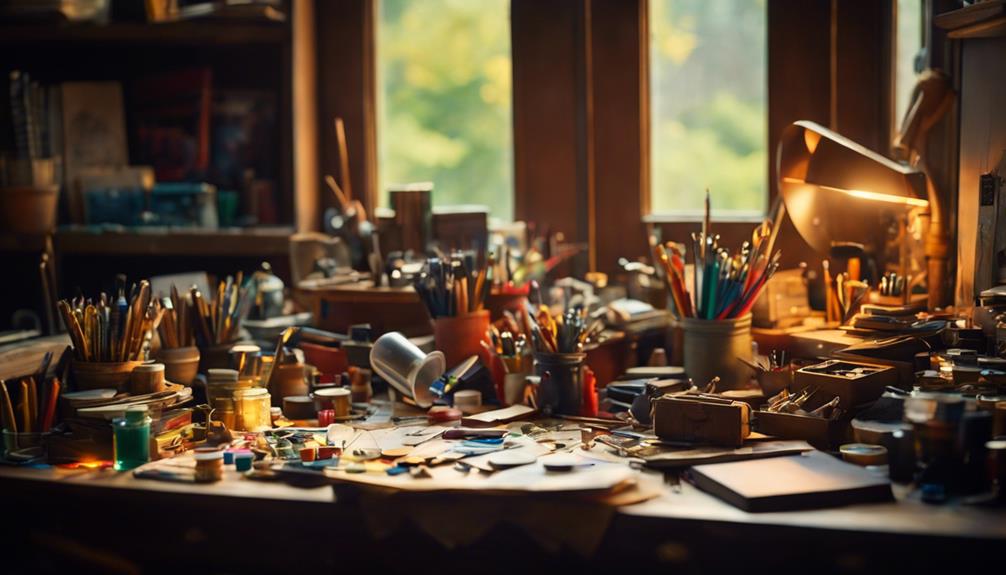
Building your Photorealism skillset in art and photography demands a thorough understanding and practice of several key techniques.
Photorealistic artwork necessitates prolonged intellectual observation and attention to detail in order to faithfully render the subject.
One essential element in developing a photorealistic skillset is attentive observation.
Artists must slow down and record even the most minute changes in colors and shades to accurately depict the subject.
This requires focusing on textures, light, and shadows to create a realistic image.
Classical foundation in life drawing and rigorous practice are critical for ensuring that even the smallest details are captured in photorealistic paintings.
This serves as the backbone of photorealism, guiding artists to meticulously recreate what the world offers.
Frequently Asked Questions
What Makes Something Look Photorealistic?
Precise Lighting: Accurate lighting replicates natural conditions.
Texture Complexity: Detailed material properties interact with light convincingly.
Realistic Interactions: Models and textures must capture the subtleties of real-world interactions for photorealism.
How to Achieve Photorealism in Blender?
To achieve photorealism in Blender, follow these key takeaways:
Craft detailed materials with textures and colors.
Master complex lighting techniques for realistic effects.
Adjust camera settings to accurately simulate real-world environments.
Who Is the Founder of Photorealism?
Louis K. Meisel coined the term Photorealism in 1969.
It emphasizes the use of photographic reference and mechanical methods.
Photorealism paintings aim for precise, photographic-quality representation.
What Is the Meaning of Photorealistic?
Photorealism is a style of art that accurately replicates the level of realism found in photography, involving meticulous attention to detail and reflection, often through the use of photographs as a basis.