Create a high-resolution geometric star design on a solid black background, using a DSLR camera with a 50mm lens, aperture set to f/1.8, shutter speed at 1/100s, ISO 200, capturing from a top-down view with soft, diffused lighting.
Create a festive background with gold ornaments including a snowflake, a star, and two spherical decorations, hanging against a deep navy blue backdrop, shot with a Canon EOS R5, 50mm lens, f/2.8 aperture, ISO 100, and a soft focus effect for a dreamy quality.
Create a high-resolution illustration of a praying angel with gray hair and a yellow robe standing next to a small lamb against a light blue background featuring a large yellow star, shot with a DSLR camera at f/2.8, ISO 100, 50mm lens, natural lighting, and a shallow depth of field.
Create a high-resolution digital illustration of a star shape with multiple layers in varying shades of blue, using a Canon EOS R5 with a 50mm lens at f/1.8, ISO 100, in soft natural light, and a top-down view for enhanced detail and clarity.
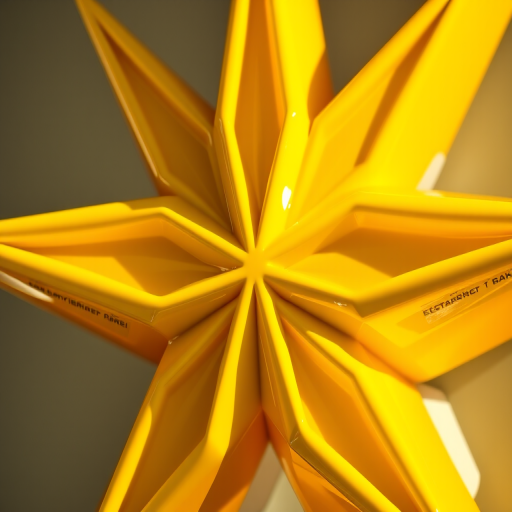
Generate a 3D golden star with sharp edges and a reflective surface, captured in vibrant detail using a DSLR camera with a 50mm lens, aperture set to f/2.8, ISO 100, in a soft diffused lighting environment to enhance depth and highlights, focusing on a clean white background.
Create a minimalist illustration of two stylized Christmas trees with star toppers on a dark blue background, with a shallow depth of field, shot using a DSLR camera at f/4, ISO 100, 50mm lens, in a soft focus style for a dreamy effect.
Generate a highly detailed image of a massive space station resembling a Dyson sphere, orbiting a distant planet with a star-filled background, using a DSLR camera with a 24mm lens at f/8 aperture, ISO 200, and a shutter speed of 1/125 seconds, capturing a wide-angle view to enhance depth and clarity.
Create a digital art scene of a person in a red shirt sitting by a campfire under a starlit sky, with mountains in the background, a full moon, and a shooting star, using a virtual camera with a wide-angle lens, f/2.8 aperture, ISO 100, 24mm focal length, and a low light setting for enhanced brightness and detail.
Create an abstract representation of a brain using white geometric star shapes on a solid black background, shot with a DSLR camera at f/8 aperture, 50mm lens, and ISO 100 for clarity, with a top-down view for symmetry and depth.
Create an illustration of cinnamon sticks and star anise on a dark background, using a Canon EOS 5D Mark IV, 50mm lens, f/2.8 aperture, 1/125 shutter speed, focused on vibrant colors and sharp details, in a flat lay style.
capture a close-up of a handmade straw star ornament hanging from a Christmas tree with a blurred background of festive decorations, aperture f/2.8, shutter speed 1/100s, ISO 200, DSLR camera, natural light, shallow depth of field
Create a high-resolution illustration of a hand holding a Vietnamese flag with a prominent red background and a bright yellow star, captured in a close-up view using a DSLR camera at f/2.8 aperture, ISO 100, and a focal length of 50mm for sharp detail and vibrant colors.
Regenerate an image of the USS Enterprise from Star Trek, using a high-resolution setting, 50mm lens, aperture f/8, ISO 100, in a studio environment with soft lighting for enhanced detail and clarity.
Create a vivid, abstract image of a colorful burst of star-like shapes radiating from a central point on a black background, using a DSLR camera with a 50mm lens, f/2.8 aperture, ISO 100, and a soft focus effect to enhance the depth and vibrancy of colors.
Create an otherworldly cosmic scene featuring a dark planet partially illuminated by a distant star, with a spiral galaxy in the background, shot with a DSLR camera at f/2.8, 24mm focal length, ISO 800, using a long exposure of 30 seconds to capture the vibrant colors and details of the nebula.
Generate a high-resolution image of a distant planet with a dark surface, surrounded by a bright glow, and a trail of asteroids leading towards a small star; use a DSLR camera with a wide-angle lens, f/8 aperture, ISO 100, and a long exposure to capture the depth of space and enhance star visibility.