

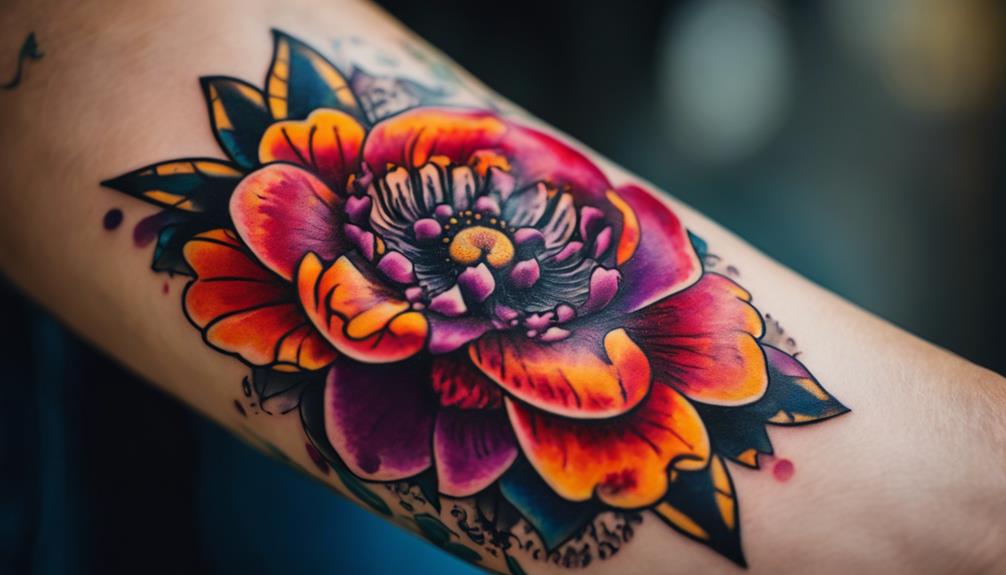
Colorful flower tattoo designs stand out with their vibrant hues and intricate details. These tattoos blend advanced techniques like microblading and fine-line work to create lifelike petals and leaf veining.
Artists use various styles, from realistic to abstract, incorporating watercolor effects and stippling for texture. The choice of blooms, colors, and cultural significance allows for personal expression in these designs.
High-quality pigments and expert application ensure lasting beauty. Proper aftercare helps maintain up to 90% of the original vibrancy over time.
The combination of artistry, symbolism, and individuality makes flower tattoos a visually striking form of body art. These designs offer a wide range of artistic possibilities for those seeking meaningful and beautiful tattoos.
Key Takeaways
- Colorful flower tattoos use vibrant hues for eye-catching designs.
- Advanced techniques showcase intricate details in petals and leaves.
Vibrant Hues and Symbolic Meanings
Flower tattoos use vivid colors and intricate designs to convey symbolic meanings. Each bloom's palette and artistic style represent specific emotions, traits, or cultural significance.
Sunflower tattoos exemplify this concept with bold yellows and oranges, creating a striking appearance that symbolizes adoration and loyalty.
Rose tattoos often employ a watercolor technique, using soft, blended hues to evoke elegance and represent love.
Peony tattoos strategically minimize color to emphasize form and symbolism. Solid black petals draw focus to the flower's center, sometimes incorporating an eyeball motif to represent good fortune and prosperous marriage.
Cherry blossom tattoos, deeply rooted in Japanese culture, use pastel pinks and whites to convey life's fleeting nature and the beauty of impermanence.
Lotus flower tattoos showcase ultra-thin lines to create an almost translucent effect, reinforcing their association with spiritual growth.
These varied approaches to color and design in flower tattoos amplify symbolic meanings. The result is deeply personal and visually stunning body art that resonates with individuals on multiple levels.
Intricate Details and Delicate Petals
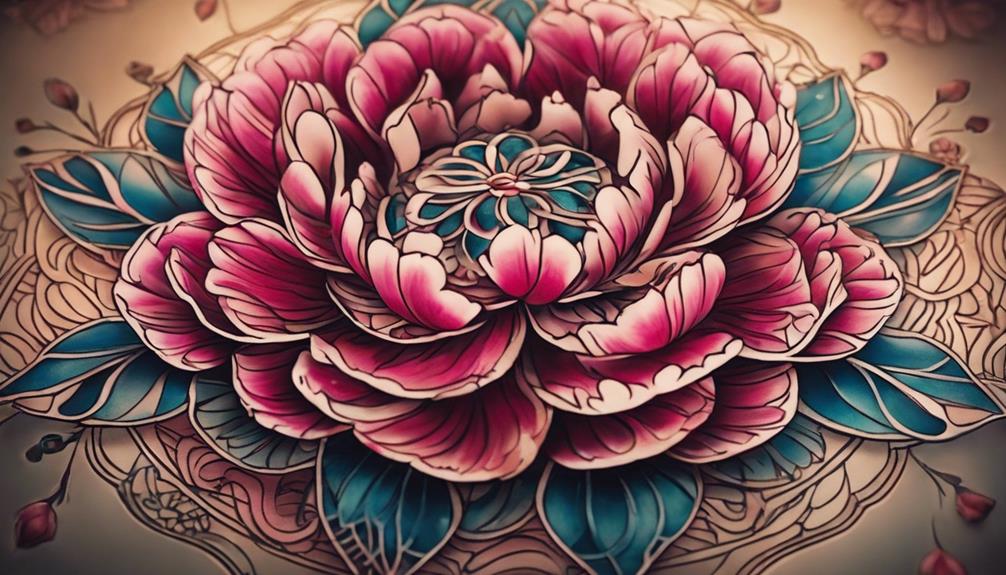
Floral Tattoos: Precision and Beauty
Colorful floral tattoos showcase intricate details through advanced techniques like microblading and fine-line work.
These methods create sharp lines that capture the softness of real flower petals, resulting in lifelike designs.
Texture and Depth
Artists use stippling and dotwork to add texture and depth to floral tattoos.
Watercolor techniques blend colors and subtle shading, giving designs an ethereal quality that mirrors delicate petals.
Realism in Floral Art
Realistic floral tattoos incorporate minute elements like leaf veining and petal textures.
This attention to detail produces stunningly lifelike representations on the skin.
Abstract Interpretations
Abstract floral tattoos offer unique interpretations of delicate petals.
These designs use creative stylization to create dreamlike, surreal imagery while maintaining the essence of floral delicacy.
Evolving Techniques
Tattoo artists continually refine their skills to push the boundaries of what's possible in floral designs.
New tools and techniques emerge regularly, allowing for even more intricate and lifelike tattoos.
Variety of Styles and Techniques
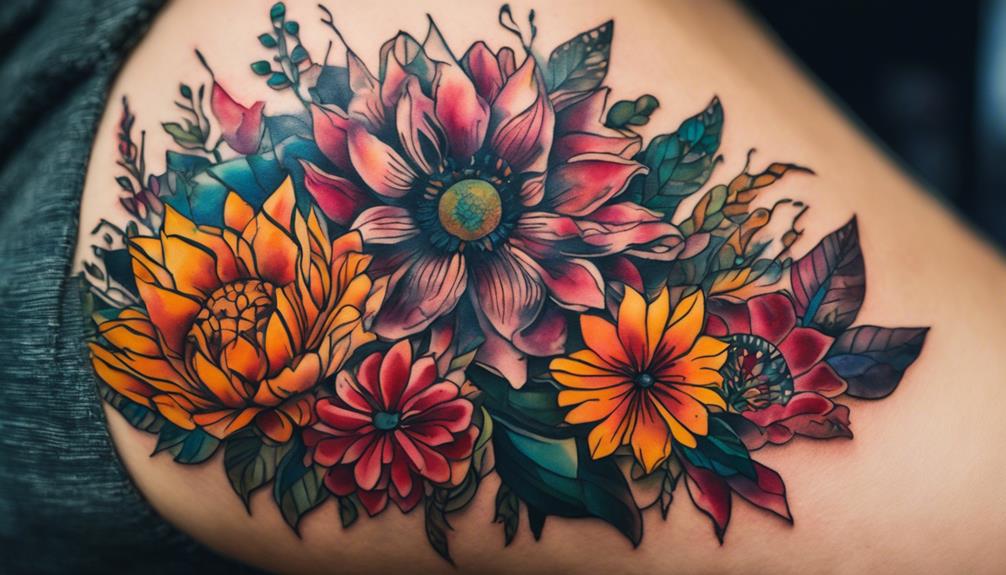
Colorful flower tattoo designs showcase a wide range of artistic styles and techniques.
Realism, watercolor, traditional, minimalist, and abstract approaches offer unique aesthetics for floral tattoos on skin.
Realism allows for detailed, lifelike depictions, while watercolor methods create soft, dreamy effects.
Traditional designs draw from Japanese and American tattoo art, using bold lines and bright colors.
Minimalist styles focus on simplicity with clean lines and essential elements.
Abstract floral tattoos experiment with stylized, non-realistic representations.
Advanced methods like microblading, stippling, and dotwork expand possibilities for intricate designs.
New ink and pigment technologies provide improved vibrancy and durability.
These varied styles and techniques allow tattoo artists to create innovative and personalized floral designs.
The art form continues to grow, inspiring both artists and clients with fresh ideas and stunning results.
Personal Expression Through Design
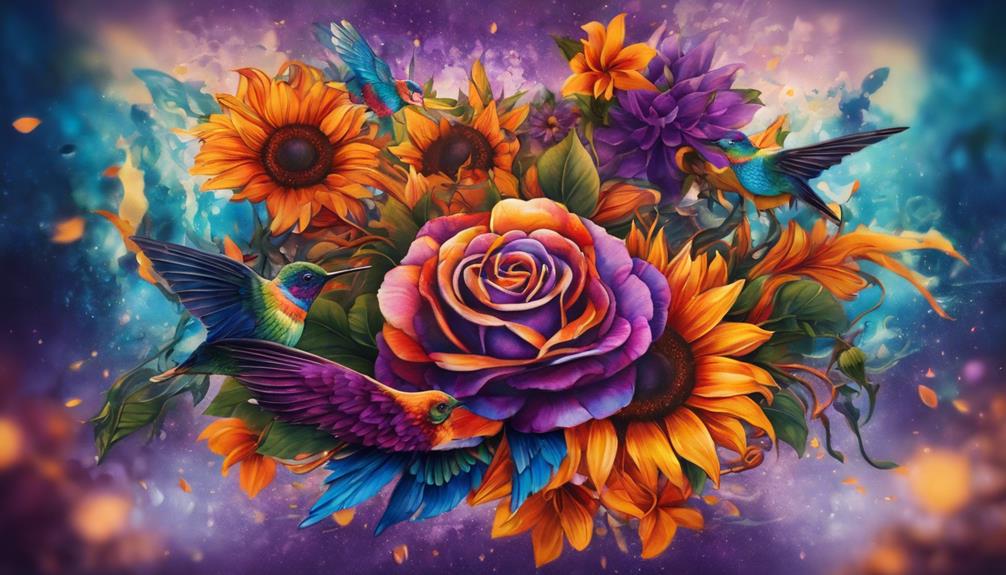
Colorful flower tattoo designs offer a powerful way for people to express themselves.
By choosing specific blooms, colors, and styles, individuals can create unique body art that reflects their personality and tastes. These designs allow wearers to share their feelings, beliefs, and life experiences in a visually appealing way.
The flexibility of flower tattoos gives people many options for self-expression.
They can opt for realistic designs or abstract interpretations, adding personal symbols or meaningful quotes to enhance the tattoo's significance. Selecting particular flowers, like roses for passion or sunflowers for happiness, adds extra layers of meaning to the artwork.
This level of customization results in one-of-a-kind tattoos that serve as visual representations of the wearer's identity and aspirations.
The intricate details and vibrant colors of these designs make them stand out, turning the body into a canvas for personal storytelling.
Flower tattoos have become increasingly popular as people seek ways to express themselves creatively and meaningfully.
Cultural Significance and History
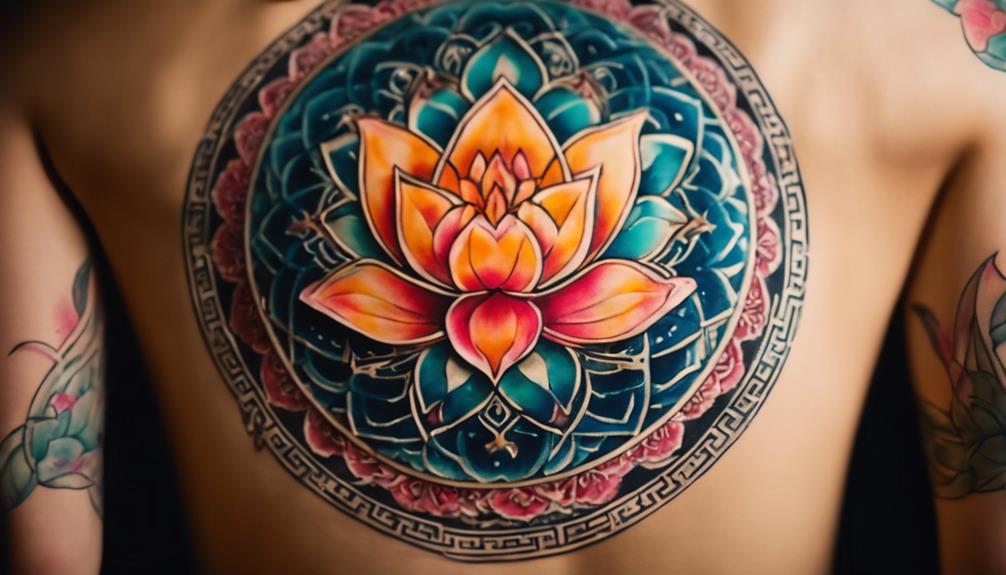
Floral tattoos hold deep cultural significance across various civilizations. Ancient Egyptians used lotus designs to represent fertility and rebirth, while Japanese culture embraces cherry blossoms as symbols of beauty and strength.
The rich history of floral meanings extends to Hawaiian traditions, where the hibiscus symbolizes femininity and allure. These long-standing customs have shaped the development of floral tattoo designs over time.
Modern floral tattoos blend historical symbolism with contemporary artistic styles. Artists draw inspiration from traditional meanings while incorporating new techniques and personal interpretations.
The popularity of floral tattoos continues to grow as people seek meaningful and visually appealing body art. Many choose designs that resonate with their cultural heritage or personal experiences.
Floral tattoo artistry has evolved to include a wide range of styles, from realistic botanical illustrations to abstract interpretations. This diversity allows individuals to express themselves uniquely through their chosen designs.
Ancient Symbolism and Traditions
Ancient symbolism and traditions shape the meanings behind colorful flower tattoos across cultures. These designs carry deep spiritual and emotional significance, rooted in historical practices.
Eastern cultures often feature the lotus flower in tattoos, representing purity and spiritual growth. Its journey from muddy waters to a beautiful bloom mirrors personal transformation.
Japanese tattoo art frequently includes cherry blossoms and chrysanthemums. Cherry blossoms symbolize the fleeting nature of life, while chrysanthemums stand for longevity and nobility.
Western traditions commonly use rose tattoos to express love, passion, or remembrance. Each flower's petals, colors, and arrangement convey specific messages in tattoo art.
Colorful flower tattoos blend ancient symbolism with modern artistic expression. They create visual stories of personal experiences, cultural heritage, and spiritual beliefs.
The ongoing popularity of these tattoos stems from their ability to connect past and present. They offer a way for people to express themselves through timeless symbols in a contemporary context.
Cross-Cultural Floral Meanings
Diverse cultures interpret flower tattoos differently, reflecting unique relationships between societies and nature.
The lotus holds significance in both Egyptian and Japanese cultures, symbolizing rebirth in Egypt and purity in Japan, with color variations adding nuanced meanings.
Japanese culture values cherry blossoms in tattoos, representing life's fleeting nature. Traditional Irezumi designs often feature cherry blossoms and chrysanthemums, exploring themes of transient beauty.
Hawaiian culture embraces the hibiscus tattoo as a symbol of beauty and femininity.
These cross-cultural floral meanings in tattoo art showcase how humans find deep symbolism in nature's diverse plant life. The universal appeal of floral tattoos stems from their ability to convey complex cultural values and personal ideals through simple, yet powerful imagery.
Understanding the cultural significance of different flowers can help individuals choose meaningful tattoo designs. This knowledge allows for a deeper appreciation of the art form and fosters cross-cultural understanding through shared symbolism.
Tattoo artists often study these cultural meanings to create more authentic and resonant designs for their clients. This attention to detail and cultural sensitivity has contributed to the growing popularity and acceptance of tattoo art worldwide.
Evolution of Designs
Ancient Egyptian culture prominently featured the lotus flower in tattoos, symbolizing fertility and rebirth. This design held spiritual meaning, often using bright pigments for visual impact.
Japanese floral tattoos carry distinct symbolism, with cherry blossoms representing life's fleeting beauty. Artists have honed their skills over time, creating detailed, layered designs that showcase delicate botanical subjects.
Hawaiian culture incorporated the hibiscus into tattoo art as a symbol of beauty and femininity. Bold, stylized renditions became popular, reflecting the island's vibrant aesthetic.
Advancements in tattooing techniques allowed artists to capture intricate details and subtle color gradients. This progress led to diverse styles, from traditional symbolic designs to realistic botanical illustrations.
Modern flower tattoos blend cultural significance with personal meaning. Artists now use cutting-edge equipment to create stunning, long-lasting pieces that honor timeless floral motifs.
The popularity of flower tattoos continues to grow, with new interpretations emerging regularly. Social media platforms showcase innovative designs, inspiring both artists and clients to push creative boundaries.
Longevity and Aesthetic Appeal
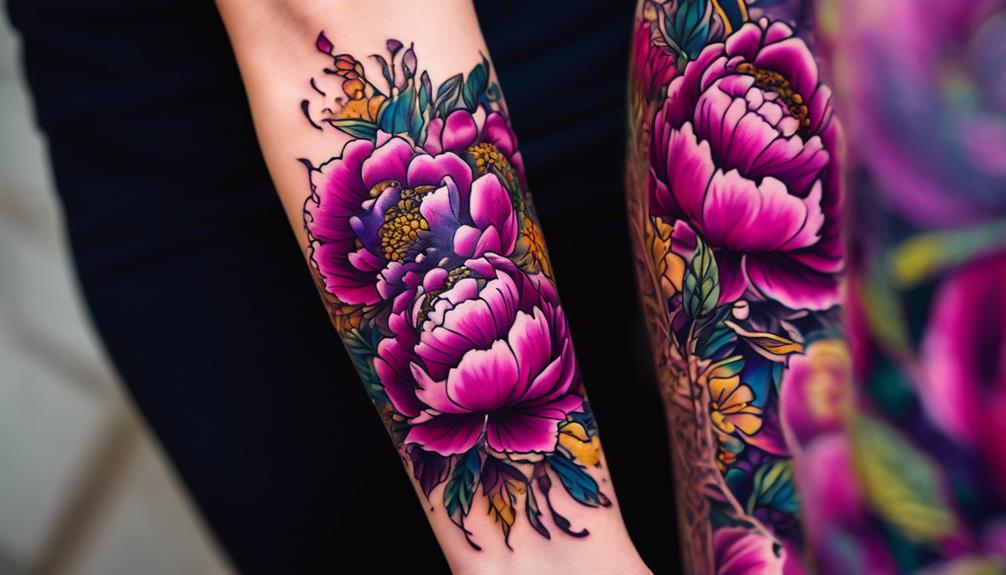
Flower tattoos with vivid colors can maintain their appeal for years when properly cared for.
High-quality pigments and advanced tattooing techniques contribute to the longevity of these intricate designs, often keeping them attractive for a decade or more.
Floral tattoos offer versatility that matches the changing seasons.
Artists can incorporate elements reflecting the evolving beauty of flowers throughout the year, adding depth and interest to the design over time.
This adaptability helps maintain the tattoo's charm as it ages with the wearer.
Vibrant Color Retention
High-quality inks and expert application techniques are key to maintaining vivid color in flower tattoos. Premium inks with light-fast pigments resist fading from UV exposure, preserving the tattoo's original appearance for years.
Proper aftercare is crucial for color retention. Regular moisturizing and sun protection help tattoos keep up to 90% of their original vibrancy after five years. Many artists suggest yearly touch-ups to maintain the design's impact.
Advanced ink technology, skilled application, and consistent care allow flower tattoos to retain their striking colors and intricate details. This ensures they remain a captivating form of body art for the long term.
UV-stable resins in specialized inks prevent color shifting, maintaining the tattoo's aesthetic appeal. Some inks guarantee color retention for up to a decade or more, making them ideal for long-lasting designs.
The combination of quality materials, expert techniques, and diligent maintenance creates flower tattoos that stand the test of time. These factors work together to preserve the tattoo's vibrancy and detail, ensuring a lasting artistic expression.
Aging Gracefully Over Time
Colorful Flower Tattoos: Preserving Beauty
Quality and expert application are vital for maintaining vibrant flower tattoos over time. High-grade inks and skilled artists contribute significantly to a tattoo's longevity. Placement affects aging, with sun-exposed areas requiring extra care.
Aftercare is crucial for preserving tattoo vibrancy. Regular cleaning and moisturizing help retain color and detail. Occasional touch-ups can revive fading areas, keeping the design fresh.
As tattoos age, they become personal stories etched on skin. Each petal and stem represents a chapter in the wearer's life. Modern removal techniques offer options for those seeking change, allowing for artistic evolution while respecting the tattoo's significance.
Maintenance and care are ongoing processes for tattoo enthusiasts. Protecting the skin from harsh elements and following proper care routines help preserve the artwork's integrity. Regular check-ins with a trusted tattoo artist can address any concerns and ensure the design stays true to its original form.
The aging process of tattoos can be seen as a beautiful journey. As the ink settles and the skin changes, the tattoo adapts, often gaining character and depth. This natural evolution can enhance the overall aesthetic, creating a unique and personal piece of art.
Seasonal Design Adaptability
Flower tattoos offer year-round appeal through clever design. Artists blend colors and species to create compositions reflecting life's cycles.
Spring blossoms, summer perennials, and fall-hued florals can coexist in a single piece, ensuring visual interest across seasons.
Incorporating birth month flowers adds personal meaning to designs. Vibrant colors and shading techniques mimic changing light conditions, making tattoos appear dynamic.
This approach creates timeless body art that evolves with the wearer's surroundings. Skilled artists strategically craft floral designs to resonate with different seasons.
Cherry blossoms evoke spring's fleeting beauty, while warm-toned flowers represent autumn's coziness. By combining various bloom times, tattoos maintain their allure regardless of the time of year.
The adaptability of flower tattoos extends their visual impact. Thoughtful design ensures these pieces remain captivating throughout the changing seasons.
For body art enthusiasts, floral tattoos offer a mesmerizing choice that stands the test of time.
Frequently Asked Questions
What Does a Flower Tattoo Stand For?
- Flower tattoos represent personal growth and emotional journeys.
- Ancient traditions inspire symbolic meanings in floral designs.
Why Are Floral Tattoos so Popular?
- Floral tattoos symbolize personal stories and cultural meanings.
- Body art trends reflect changing social attitudes.
Where Do Flower Tattoos Look Best?
- Ankle tattoos offer discreet floral charm.
- Shoulder flower designs showcase bold, eye-catching art.
What Goes Well With a Flower Tattoo?
- Colors and lines highlight flower tattoo's natural beauty
- Shading and patterns add depth to floral designs
